A first-time buyer once ordered 2000 pieces of a custom silicone teether with a double-color logo, convinced it was a safe MOQ. The factory's silence after the deposit told a different story. The real minimum wasn't 2000—it was 5000, because the second color required a separate molding cycle that the 2000-piece run couldn't absorb. That buyer lost six weeks and a deposit before the project ever reached production.
For custom OEM/ODM baby toys—sensory blocks, wooden activity cubes, silicone pullers, plush rattles—the verified entry-level MOQ sits at 500 to 1000 pieces per SKU for standard materials and single-logo decoration. But that number is a floor, not a promise. Every layer you add—custom colors, hang tags, blister cards, multi-location printing—pushes it upward. Below we map exactly what drives those shifts, how to talk to suppliers without signaling inexperience, and where to place your first order without burning budget on a run you can't sell.
Key Takeaways
- The baseline MOQ for custom OEM/ODM baby toys is 500–1000 pcs per SKU when you're working with standard body colors, existing mold libraries, and a single logo print.
- Adding custom Pantone-matched silicone, multi-color injection, or child-resistant blister cards routinely pushes MOQs to 2000–5000 pcs per design.
- Factories in the Chenghai cluster (Shantou) quote lower per-unit costs at higher volumes, but independent design studios in the US or EU often accept 250–500 pcs for simpler textile or wooden toys.
- The fastest way to kill a negotiation is asking 'what's your MOQ?' before specifying materials, age grade, and packaging format—suppliers read that as high-risk tire-kicking.
- Always confirm whether the MOQ applies per SKU, per design family, or per order. A 3000-piece total order split across six SKUs is a different conversation than 3000 of one SKU.
Supplier Channels Compared
| Supplier Type | Chenghai OEM factory |
|---|---|
| Typical Custom MOQ | 500–3000 pcs/SKU (varies by decoration) |
| Price Posture | Lowest FOB unit cost at volume; high tooling amortization on small runs |
| Authorized for Private Label? | Yes, with brand authorization letter |
| Ships From | Shantou / Shenzhen (FOB) |
| Supplier Type | Domestic design studio (US/EU) |
| Typical Custom MOQ | 250–500 pcs/SKU for textiles/wood; higher for injection-molded plastic |
| Price Posture | Higher unit cost; lower upfront tooling risk |
| Authorized for Private Label? | Yes, often white-label friendly |
| Ships From | Domestic warehouse (US/EU) |
| Supplier Type | B2B marketplace (Alibaba, Made-in-China) |
| Typical Custom MOQ | Listed 500–2000 pcs/SKU; often negotiable downward for simple designs |
| Price Posture | Mid-range; watch for inflated 'sample fees' that signal a trading company, not a factory |
| Authorized for Private Label? | Varies; verify with a test order and third-party inspection |
| Ships From | China (FOB) or dropship via 3PL |
| Supplier Type | Wholesale distributor (US/EU) |
| Typical Custom MOQ | No custom OEM; stock-only with low MOQ (24–72 pcs) |
| Price Posture | Highest per-unit; fastest lead time |
| Authorized for Private Label? | No; branded stock only |
| Ships From | Regional warehouse |
Chenghai OEM Factories: The Volume Baseline
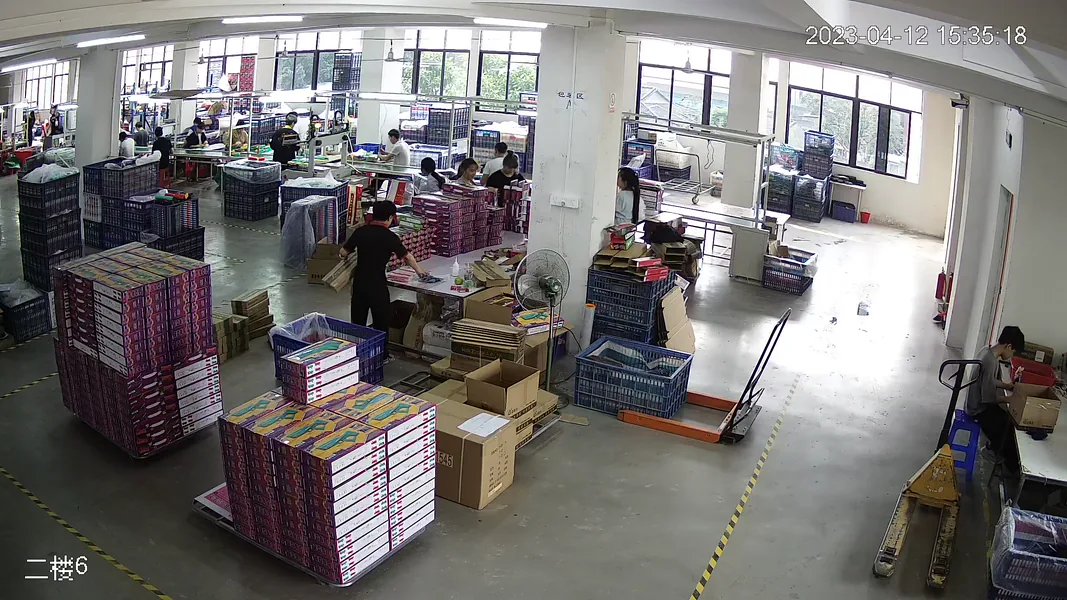
If you're importing a custom baby toy line for US or EU retail, the Chenghai district in Shantou is where the math tilts in your favor. Over 10,000 toy enterprises operate inside 345 square kilometers, supported by more than 2000 mold shops, 500 spray-painting facilities, and 300 printing and packaging plants within a 30-minute radius. That density keeps tooling costs lower and iteration cycles shorter than anywhere else in the world. The standard MOQ here—500 to 1000 pieces per SKU—assumes you're using an existing body mold, one standard color, and a single-position logo print. That's the private-label sweet spot: factory uses an open mold, you add your brand, everyone walks away at 1000 pieces.
The moment you deviate, the MOQ climbs. A second injection color adds a mold-change cycle and minimum material batch; most Chenghai shops won't run that below 3000 pieces. Custom blister cards with child-resistant locking tabs require a separate die-cut and heat-seal tool, typically adding $800–$1200 in one-time costs and pushing the MOQ to 3000–5000 pcs to amortize the investment. The same logic applies to custom hang tags with foil stamping, window boxes, or multi-language instruction sheets. The factory's margin lives in the production run, not the setup. If setup eats 40% of the total job cost, they'll either decline or quote a price that makes your retail margin evaporate.
A practical rule: for every custom decoration layer beyond a single logo, budget an MOQ increase of roughly 1000 pieces. So a teether with custom body color, custom silicone shore hardness, and custom hang tag? That's not 500 pieces—it's 3000 minimum, and often 5000 before the unit price makes sense. Ask for a cost breakdown that separates tooling amortization from per-piece production. If the factory won't provide it, find one that will.
Domestic Design Studios: Low MOQ, Higher Unit Cost
For brands launching a test assortment or a boutique line, US- and EU-based studios that design and manufacture in small batches offer a fundamentally different equation. These shops typically work in textiles (organic cotton rattles, knitted loveys) or wood (maple teething rings, beech activity cubes), where the tooling barrier is low and the labor is domestic. MOQs here range from 250 to 500 pieces per SKU. The trade-off is unit economics: a wooden grasping toy that costs $2.80 FOB from Chenghai at 3000 pieces might run $7.50 from a Vermont studio at 300 pieces. But you're not paying for a mold, you're not warehousing 2700 extra units, and you can reorder in six weeks instead of four months.
This channel makes sense when your product's selling point is material provenance—organic, locally made, FSC-certified wood—rather than price. US retailers like independent baby boutiques and museum gift shops actively prefer this story, and they'll pay the wholesale premium. One caution: studios that design in-house rarely have the bandwidth to iterate on your concept from scratch. They're offering their design with your logo, not true ODM. If you need a fully novel shape—a silicone fox teether that doesn't exist in their catalog—you're back to factory-direct, and the MOQ resets to Chenghai levels.
B2B Marketplaces: The Middle Ground with Hidden Risks
Alibaba and Made-in-China list thousands of baby toy suppliers quoting MOQs of 500–2000 pieces. Treat those numbers as a starting bid, not a contract. Many listings are posted by trading companies that don't own the mold or the production line. When your customization request hits their desk—custom color, custom packaging, custom safety testing to ASTM F963 or EN71—they forward it to the real factory, add a margin, and come back with a revised MOQ that's often double the original. You lose time and negotiating leverage in that handoff.
Two ways to filter: first, request a video call showing the production floor with that day's newspaper or a timestamp. A factory will say yes; a trading company will stall. Second, ask for the mold ownership documentation for the product you're customizing. If they can't produce a mold number and a photo of the tool, you're not talking to the manufacturer. For simple customizations—a logo on an existing silicone shape, a color change from a factory's stock palette—B2B marketplaces work fine, and MOQs of 1000 pcs are realistic. For anything requiring new tooling, use the marketplace to identify the factory name, then contact them directly.
How to Choose: Matching MOQ to Your Retail Strategy
Work backward from your shelf price. If you're selling to mass-market chains where the wholesale price needs to hit $3.50–$5.00 for a multi-piece sensory set, the Chenghai factory route is non-negotiable—you need the volume to get the unit cost. Accept the 3000-piece MOQ and plan your SKU count so the total order fills a 20-foot container, which optimizes freight per unit. If you're placing a 3000-piece order across three SKUs, the per-unit ocean freight from Shantou to Long Beach is roughly one-third what it would be for 500 pieces shipped LCL.
If your channel is direct-to-consumer or premium boutique, where a $24.99–$34.99 retail price supports a higher landed cost, start with a domestic studio at 300–500 pieces. Prove the SKU sells before committing to tooling in Asia. The worst outcome is a garage full of 2800 custom teethers in a color that didn't test well. Use the low-MOQ domestic run to gather sell-through data, refine the design, then take the winning SKU to Chenghai for the production run that actually makes money.
One last lever: ask Chenghai factories about 'family MOQs.' Some will apply the minimum across a product family—say, three animals in the same teether line—so 1000 pieces total, split 400/300/300, satisfies the MOQ. This only works when the designs share the same mold base and decoration process. Lead with that framing in your RFQ and you'll get better answers than asking 'what's your minimum?' in the abstract.
What to Ask Suppliers Before You Quote
The RFQ stage is where MOQ misunderstandings get baked in. Send a structured brief, not a one-line email. Suppliers who receive 'MOQ for baby toys?' will give you a safe, high number designed to filter out non-serious buyers. Suppliers who receive a spec sheet with materials, age grade, packaging format, and target retail price get a real answer. Below is the minimum checklist to include in your first outreach.
| Product specification | Attach a photo or sketch, note the material (silicone, beech wood, ABS, organic cotton), and state the target age band (0-12m, 6-18m, etc.). Age band dictates safety testing scope and directly impacts MOQ. |
|---|---|
| Customization layers requested | List every layer: body color (standard vs. Pantone-matched), logo application (pad print, emboss, laser engrave), packaging type (polybag, blister card, window box), and any insert or hang tag. Each layer raises the MOQ. |
| Target quantity range | State a range, not a single number: 'We're exploring 1000–3000 pcs across 3 SKUs.' This signals flexibility and invites the supplier to suggest the most efficient break point. |
| Safety certifications required | Specify which standards you need: ASTM F963 (US), EN71 (EU), or both. Testing and certification costs are typically fixed per SKU—$300–$800 depending on material and lab—and must be amortized into your MOQ calculation. |
| Delivery terms and port | State FOB Shantou or FOB Shenzhen, and whether you'll use your own forwarder. Suppliers often pad freight margins; removing that variable keeps the MOQ conversation focused on production. |
FAQ
What is the absolute lowest MOQ for a custom sensory baby toy?
For a standard silicone or wood toy using an existing mold with one logo print, 500 pieces per SKU is the floor at most Chenghai factories. Below 500, you'll need to approach a domestic studio or pay a significant per-unit surcharge that often makes the landed cost unworkable for retail.
Why does adding a second color double the MOQ?
Multi-color injection molding requires a dedicated mold cycle for each color, plus a minimum raw material batch per color. The factory needs enough total pieces to cover the machine setup time and material waste, which typically pushes the MOQ from 1000 to 3000 pieces.
Can I split an MOQ across multiple SKUs?
Sometimes. If the SKUs share the same mold base and decoration method—for example, three animal shapes in the same teether line—some factories apply a 'family MOQ' where the total across SKUs meets the minimum. Ask explicitly: 'Does the 1000-piece MOQ apply per design or per product family?'
Does custom packaging affect the MOQ more than custom product color?
Often yes. Custom blister cards and window boxes require separate die-cut tools, printing plates, and assembly labor. A custom blister card alone can add $800–$1200 in tooling and raise the MOQ by 1000–2000 pieces, whereas a simple polybag with a logo sticker adds almost nothing to the minimum.
How do I verify a supplier's MOQ claim before paying a deposit?
Request a production time-study for your specific SKU showing setup time versus run time. A legitimate factory can provide this. Also ask for photos of a similar custom job they've completed at the MOQ they're quoting—if they've done 500 pieces of a custom silicone teether before, they'll have production floor photos to prove it.
Request a Quote for Your Custom Baby Toy Line
If you have a spec sheet ready—or a rough sketch and a target retail price—RanToys can return a firm MOQ and per-unit cost within 48 hours. Send your brief and you'll receive a breakdown that separates tooling, production, packaging, and testing costs so you can see exactly where your volume commitment matters.