For a typical baby toy like an ABS bath toy, wholesale MOQs in 2026 usually range from 500 to 1,000 pieces per SKU. That means you can order 500 units of a single design and still get factory pricing, but you'll pay more per unit than a distributor ordering 10,000. Some simple items go as low as 144 pieces at $2.93 per unit, but unit prices rise. This guide covers how MOQs work in baby toy manufacturing, what drives them up or down, and how to negotiate better terms—plus materials, packaging, lead times, documents, and a practical RFQ template.
Why Buy in Bulk
Buying in bulk cuts your unit cost, but it also locks up cash and warehouse space. For baby toys, the margin math is simple: a 500-piece MOQ at $2.93 per unit means you invest $1,465 before shipping. At 1,000 pieces, that's $2,930. If you sell through at a 50% markup, you need to move 500 units just to break even on the product cost.
The real trade-off is between price per unit and your ability to sell through. A lower MOQ lets you test multiple designs, but you lose volume discounts. A higher MOQ gives you better margins, but you risk dead stock if a design flops. The sweet spot for most importers is 500 to 1,000 pieces per SKU, which balances cost efficiency with manageable risk.
Key Takeaways
- Know the MOQ band: For ABS baby toys, expect MOQs of 500–1,000 pieces per SKU. Some factories offer lower MOQs (like 144 pcs) for simple items, but you'll pay a higher unit price.
- MOQ is not just a number: It's tied to material, packaging, and production setup. Custom colors, custom packaging, or new molds raise the MOQ. Standard designs and generic packaging lower it.
- Negotiate on the bundle, not the unit: Ask for a lower MOQ on a mix of SKUs, or offer to pay a small setup fee to reduce the per-SKU MOQ. Many factories will flex if you commit to a total order value.
- Check the documents: Baby toys require EN71 (EU) or ASTM F963 (US) certifications. Ask for test reports and certificates before you order. A supplier that can't provide them is a red flag.
- Factor in lead time: Production for a 500–1,000 piece order typically takes 2–4 weeks, plus shipping. Plan your inventory so you don't run out of stock during peak seasons.
- MOQ range: 500–1,000 pcs per SKU (typical for ABS toys)
- Material impact: ABS is standard; custom materials increase MOQ
- Packaging impact: Blister packs are common; custom printing raises MOQ
- Certification: EN71 (EU), ASTM F963 (US), or equivalent; ask for test reports
- Lead time: 2–4 weeks production, plus shipping; varies by spec
Which Baby Toys Have the Lowest MOQs?
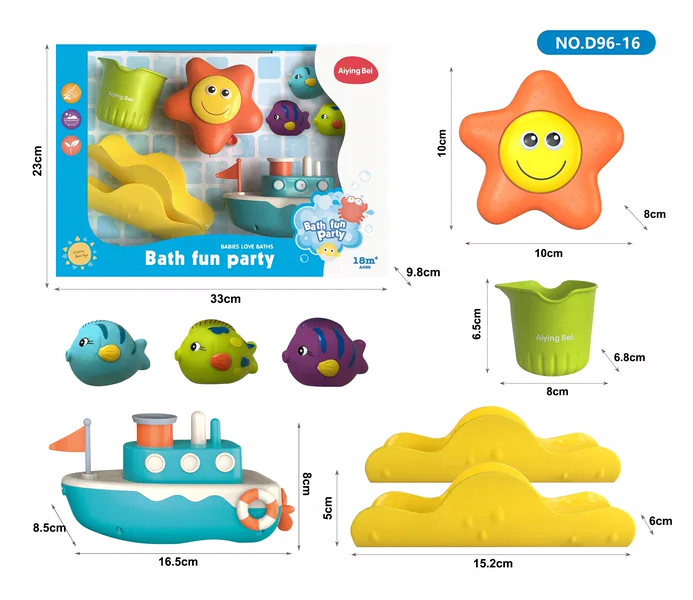
A simple ABS bath toy can have a MOQ as low as 144 pieces at $2.93 per unit—a great entry point for testing a market. But for better pricing, you'll need to scale up to 500 or 1,000. Bath toys, teethers, rattles, and soft blocks are perennial favorites: low in cost, high in perceived value, and easy to sell through retail. Other popular categories include teething rings (silicone or rubber), stacking cups, and activity balls. Each has its own MOQ, but the 500–1,000 band is a safe bet for most ABS and plastic toys.
By Theme / Use-Case
Organize your assortment by use-case to maximize cross-selling. For bath time, bundle bath toys with waterproof books and foam letters. For teething, offer silicone teethers with clips and a storage case. For travel, compact rattles and sensory balls that fit in a diaper bag.
Seasonal themes matter too. For summer, water toys like bath squirters and pool floats. For winter holidays, plush rattles and themed gift sets. Each theme can have its own MOQ, but you can often combine them under one supplier to hit a total order floor. That's how you get variety without paying a premium per SKU.
How to Choose the Best
Start by listing your target market and age band. For the US, you need ASTM F963 compliance. For the EU, it's EN71. Make sure the supplier's certifications match your market. Then compare MOQs, unit prices, and lead times across at least three suppliers.
Ask for samples before you commit. A sample lets you check material quality, paint adhesion, and packaging. Also, verify the supplier's manufacturing capacity—can they handle a repeat order in 3 months? Check their audit history and ask for references.
If you're new to importing, consider starting with a small order (under 1,000 pcs) from a factory that allows mixing SKUs. This lets you test the market without overcommitting. As you grow, you can negotiate lower MOQs based on your order history.
How to Compare Suppliers on MOQ, Price, and Reliability
| MOQ | What's the minimum per SKU? Can you mix SKUs? Is there a total order floor? |
|---|---|
| Unit price | Is it FOB or CIF? What's the price at 500, 1,000, and 5,000 pieces? |
| Lead time | Production time, plus shipping time to your port. Add buffer for delays. |
| Certifications | EN71, ASTM F963, CPSIA, REACH—ask for copies of test reports. |
| Packaging options | Standard blister, custom print, or bulk? Custom packaging raises MOQ. |
| Factory audit | Ask for a recent audit report (BSCI, Sedex, or ISO 9001). Varies by spec. |
What to Ask Suppliers Before Ordering
Before you send a request for quotation (RFQ), prepare a clear brief. Include your market, target age, quantity, pack format, and delivery terms. For example: 'US market, ages 0-3, 1,000 pcs of ABS bath toy, FOB Yantian, EN71 certified.'
Then ask these six questions: What is the MOQ per SKU? Can you mix different designs? What is the unit price at my quantity? What certifications do you have, and can you share test reports? What is the production lead time? What are the packaging options and costs?
A good supplier will answer clearly and provide references. A red flag is vague answers, no test reports, or pressure to order more than you need.
FAQ
What is a typical MOQ for baby toys in 2026?
Expect 500–1,000 pieces per SKU for ABS toys. Some simple items go as low as 144 pieces, but unit prices are higher.
How can I reduce the MOQ?
Ask for a mixed SKU order, accept standard packaging, or pay a small setup fee. Some factories will lower MOQ if you commit to a total order value.
What certifications do I need for baby toys?
According to EN71 (EU) and ASTM F963 (US) standards, you need these certifications for market access. Always ask for test reports before ordering.
How long does production take?
Typically 2–4 weeks for a 500–1,000 piece order, plus shipping. It varies by factory and complexity.
Can I mix different designs in one order?
Many factories allow mixing SKUs if you meet a total order minimum. Ask upfront.
Related Products & Categories
Request a Quote
Ready to source baby toys with a clear MOQ and certification? Send your RFQ to RanToys (www.rantoys.com) and get a detailed quote within 48 hours. We help importers and distributors match MOQs to their market—no pressure, just clear numbers.