Quick answer
The right way to clean baby toys depends on the material, construction, finish and whether water can enter the product. A wholesale buyer should request product-specific care guidance for the approved SKU instead of applying one universal method to every toy. Review the surface, seams, drainage, attachments, electrical parts, fabric, filling and packaging instructions. For a range, put clear care notes on the product page or pack and keep the wording consistent with the supplier's approved information.
Why is product-specific care important?
Two toys that look similar may have different construction. One may be sealed, another may have openings, sound components, fabric, a wood finish or an attachment that changes the care method. A supplier should explain what the approved item can tolerate and what should be avoided.
Care language is part of the buying specification. It affects packaging, retailer training, customer questions and the way a product is stored between shipment and sale.
How should plastic, silicone or teething formats be reviewed?
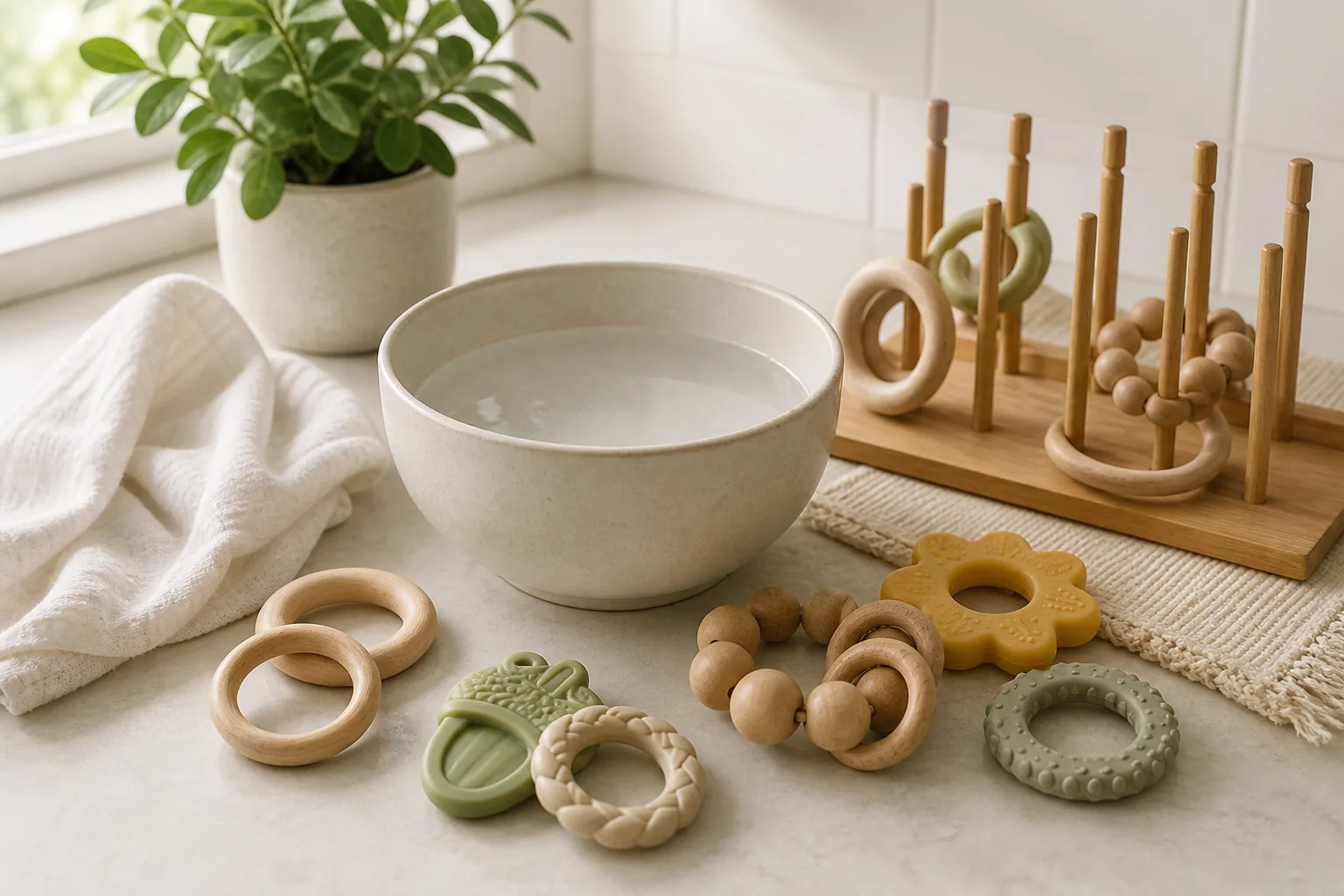
For tactile and teething formats, check the surface, seams, edges, openings, texture and any attached part. Confirm whether the item is wipe-clean, washable or unsuitable for immersion. If the product has a cavity or a sound component, ask how moisture should be handled.
- Request the approved cleaning and drying instructions.
- Confirm whether a dishwasher, heat or a chemical cleaner is allowed; do not assume.
- Review how the product should be inspected after cleaning.
- Match the care wording to the market and the final pack.
What should buyers ask about bath toys?
Bath toys need a clear conversation about drainage, trapped water, seams and drying. A closed or hard-to-dry design may require different care language from a simple open cup or scoop. The buyer should understand how the item is cleaned, dried and stored between uses.
Use the baby bath toys category as a starting point, then confirm the details for the approved SKU. Avoid a blanket claim such as mold-proof or germ-proof unless a qualified document supports the exact claim and market.
How should wooden toys be cared for?
Wooden baby toys should be reviewed for wood type, finish, paint or coating, moisture exposure and the way the surface is sealed. Ask whether the item should be wiped with a damp cloth, dried immediately or kept away from prolonged water. The answer belongs in the product specification and, where relevant, on the retail packaging.
Small marks, rough edges, finish changes and moisture damage should be part of the incoming inspection conversation, not discovered after a shipment is distributed.
What about plush and soft toys?
For infant plush toys, request the fabric, filling, seam, attachment and washing information. A removable cover may have different instructions from a sewn construction. The pack should not promise machine washing, tumble drying or stain removal unless those directions have been confirmed for the approved product.
Retailers can make the information easier to use by showing a short care summary and directing the customer to the full product instructions.
How can care instructions become a buying advantage?
Clear care details reduce avoidable questions for importers, retailers and distributors. They also help a buyer compare two otherwise similar concepts. Include care in the sample review, packaging brief, product page and staff notes instead of treating it as an afterthought.
- Ask for the care method by material and construction.
- Test the final pack wording against the approved information.
- Keep cleaning, drying and storage instructions together.
- Review changes if the material, finish or packaging changes.
What should a buyer request from the supplier?
Ask for the intended use, material information, care instructions, packaging copy, inspection points and any market-specific document discussion that applies to the selected SKU. The safety and quality page explains the questions to bring, while an RFQ gives the team the context needed to answer.
Buyer worksheet
Turn care information into an approved range note.
Cleaning guidance is most useful when it follows the construction rather than the product's marketing label. A buyer can ask the supplier to describe the surface, seams, openings, attachments and parts that should stay dry. That answer can then be compared with the sample, the finished pack and the retailer's customer-service language. If the product is changed from a sealed construction to one with a cavity, or from a hard surface to a fabric cover, the care note should be reviewed again.
For an assortment, group the items by practical care method while keeping each SKU's instruction separate. A wipe-clean teether, a washable plush item, a wooden piece that should not be soaked and a bath item that needs drainage may all sit in one baby-toy program, but they should not share one oversimplified instruction. The product page, package, carton insert and internal sales notes should use the same approved wording.
At sample review
Look at the details water reaches.
Check seams, joints, holes, sound elements, surface finish, fabric, filling and attachments. Ask what can be cleaned, what must be dried and which parts should be inspected after use.
At packaging review
Make the instruction easy to find.
Confirm the care language, icons, translations and warnings match the approved product. Do not add a stronger claim than the supplier information supports.
At replenishment
Record any material change.
When the color, coating, fabric, filling, attachment or pack changes, check whether the care wording, sample review or document discussion must change as well.
A focused RFQ can ask for the material, intended age, care method, drying method, storage guidance, packaging copy, MOQ and carton plan in one message. That creates a useful record for purchasing, merchandising and customer support. For the wider buying path, review wholesale terms, safety and quality questions and how to buy.