A single plush stacking toy can generate three wildly different quotes: 500 units at $2.80 FOB, 3,000 units at $1.90, or a demand for a full 20GP container. The gap isn't random—it's a direct signal of each factory's business model, production scale, and overhead. A structured supplier comparison is the skill that separates a profitable import from a warehouse of unsellable stock. This guide provides the concrete criteria used inside Chenghai factories to evaluate each other: minimum order quantity (MOQ) thresholds, real factory lead times, sea freight logistics for FCL and LCL, and packaging that passes ASTM F963 or CE labeling audits. You'll leave with a repeatable RFQ framework and the ability to read a formal quotation like a production manager.
By the end, you'll know exactly which questions force a supplier to reveal their true capability—and which answers are just sales noise.
Sourcing Verdicts at a Glance
- Chenghai (Shantou) for plastic/educational toys: MOQ typically 96–500 units for simple ABS toys; dense supplier cluster cuts mold amortization and packaging costs.
- Yiwu for plush/low-complexity giveaways: MOQ can drop to 100–300 pieces but quality consistency and certification support are weaker; better for promotional items, not branded retail.
- Lead time reality check: Standard plastic toy production runs 25–45 days after deposit and mold approval; add 7–15 days for custom packaging print cycles.
- Packaging compliance non-negotiable: Suppliers must provide EN71/ASTM F963 test reports for the exact packaging configuration; a generic 'passed' statement is worthless.
- FCL vs LCL rule of thumb: Switch from LCL to FCL around 15–18 CBM; below that, LCL consolidation via Shantou/Shenzhen port is usually cheaper despite higher per-CBM rates.
Why Is Chenghai/Shantou the Benchmark for B2B Toy Sourcing?
Chenghai district covers 345 square kilometers but contains over 10,000 toy manufacturing and supporting enterprises, more than 300,000 skilled workers, over 2,000 mold workshops, 500+ printing and packaging plants, and 50+ specialized logistics companies. A single plastic toy doesn't travel across provinces before assembly—the mold shop, injection floor, pad-printing sub-contractor, and blister-packaging provider often sit within a 20-minute drive. For an importer, that translates to shorter lead times, lower domestic freight cost, and the ability to audit three suppliers in a single afternoon.
Yiwu functions as a commodity trading hub. Its suppliers frequently source from Chenghai factories, add a margin, and resell. While Yiwu excels at low-MOQ mixed-container consolidation for general merchandise, a buyer seeking consistent F963-compliant baby toys with full OEM documentation will find the paper trail in Chenghai shorter and the technical conversations deeper.
Shantou Port and the nearby Shenzhen terminals handle FCL and LCL shipments to the US West Coast (Long Beach/Oakland) in roughly 14–18 days transit, with established freight-forwarder networks that understand toy-specific customs documentation. This logistics maturity removes one variable from your comparison spreadsheet—you can assume comparable ocean freight quotes across suppliers shipping from the same port cluster, and focus your evaluation on factory-side variables.
What Are the Key Criteria for Comparing Toy Suppliers?
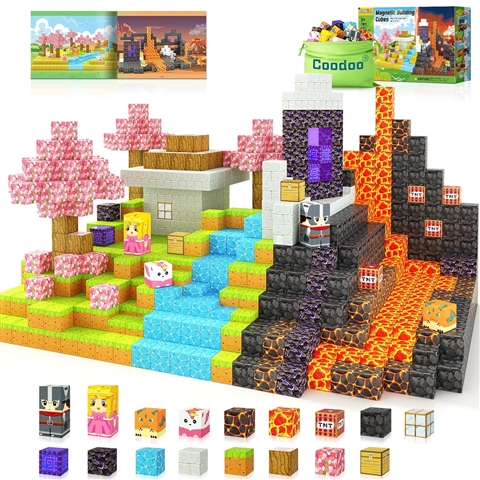
When you receive three quotations for the same baby toy, the differences reveal each factory's business model. A supplier quoting MOQ 3,000 units isn't being difficult; they're telling you they run high-volume injection lines where mold-change downtime makes small batches unprofitable. Another quoting MOQ 96 (like the Gateway to Time and Space ABS block set at $5.08 FOB) signals flexible semi-automated lines that can pivot between SKUs.
Here's how to decode the three variables that matter most.
Supplier Comparison Matrix: Toy Types, MOQ Bands & Certifications
| Manufacturer Type | Chenghai OEM Factory (e.g., RanToys) |
|---|---|
| MOQ Range | 96–500 units per SKU for simple ABS toys; higher for custom molds. |
| Lead Time | 25–45 days after deposit and mold approval. |
| OEM/ODM Capability | Full service: custom mold development, material specification, and packaging design. |
| Typical Certifications | EN71, ASTM F963, CPSIA tracking labels; can provide third-party lab reports for product and packaging. |
How to Build a Standardized RFQ Brief That Gets Comparable Answers
The most common mistake buyers make is sending a single-sentence inquiry like 'quote me your best baby toys.' Factories receive dozens of these daily and respond with generic catalog PDFs. A strong RFQ brief forces every supplier into the same frame so you can compare line by line.
Your RFQ email should contain these six fields:
1. Market and compliance standard — 'US retail, ASTM F963 required, CPSC tracking label format.' This immediately filters suppliers without US-testing experience.
2. Age band — '0–36 months' or '3+ years.' This determines safety standard sub-sections and packaging warning requirements.
3. Product description with material spec — 'ABS building blocks, no BPA, no phthalates, matte finish.' Vague material descriptions invite cost-cutting substitutions.
4. Quantity and MOQ flexibility — 'Trial order 500 units; repeat quarterly at 3,000 units. Please quote both tiers.' This reveals volume pricing breaks and whether the supplier will invest in the relationship.
5. Pack format — 'Individual color box with window, English/Spanish warnings, 6 pcs per inner, 36 per export carton.' Packaging drives roughly 15–30% of total unit cost; specifying it upfront avoids requotes.
6. Delivery terms — 'FOB Shantou or FOB Shenzhen. Please state which port and incoterm you quote.' A supplier who quotes EXW without explaining inland freight to port is not ready for export.
Structuring an RFQ this way eliminates multiple rounds of back-and-forth. A buyer who ran a mixed order of six soft SKUs—fruits, animals, stress balls—with clear blister packaging and a request for FOB quotation plus QC photos before shipment was able to compare four factories in two days.
How to Read a Formal Quotation: The Seven Lines That Actually Matter
Ignore the company introduction paragraph. Focus on these seven data points and flag any that are missing:
Line 1 — Item number and description: Must match your RFQ exactly. If the supplier changed the material code, ask why.
Line 2 — Unit price and currency: Confirm USD or RMB; FOB or EXW. A price quoted in RMB without stating incoterm is a red flag.
Line 3 — MOQ per SKU and total order minimum: Some factories quote a low per-SKU MOQ but impose a total order value floor (e.g., $5,000).
Line 4 — Tooling/mold cost (if OEM): Usually $300–$1,500 for simple ABS molds in Chenghai. Confirm mold ownership and lifespan clauses.
Line 5 — Sample policy: 'Free existing sample, buyer pays freight' is standard. Custom samples should have a clear cost and lead time.
Line 6 — Packaging specification: Carton dimensions, pieces per carton, gross weight. This determines your freight quote accuracy.
Line 7 — Lead time and payment terms: '30 days after 30% deposit, balance before shipment' is the Chenghai norm. Longer lead times for Japanese-grade QA are expected—Japanese buyers routinely take 6–12 months from contact to first order due to exhaustive quality iterations.
What Are the Packaging & Labeling Compliance Requirements for ASTM F963 and CE?
Packaging isn't just a cost line; it's a regulatory gate. For US retail, ASTM F963 and CPSIA require tracking labels with manufacturer name, date code, and batch number permanently affixed to the product and packaging. For EU, the CE mark must appear with the importer's name and address, plus age-warning pictograms per EN71-1.
When comparing suppliers, ask for a copy of the third-party lab test report for the packaging configuration you're buying—not just the toy itself. A plastic block set may pass heavy-metal migration tests, but the color-printed window box could fail phthalate limits on the PVC film. Opting for zero-plastic, FSC-certified packaging can add 30–50% to packaging cost but unlocks premium retail channels.
Practical checkpoints: confirm the supplier prints warning text in your target language directly on the packaging—not on a sticker applied later. Stickers detach in transit and create a customs liability. Also verify that inner packaging (blister trays, twist ties) meets choking-hazard and sharp-edge standards; these are frequently overlooked until a third-party inspection flags them.
FCL vs LCL Logistics: When to Consolidate and When to Fill a Container
Sea freight decisions shape your landed cost more than most buyers realize. From Shantou/Shenzhen to US West Coast ports, LCL rates run roughly $120–$180 per CBM, while a 20GP flat rate lands around $2,800–$3,500 (market-dependent). The break-even sits near 15–18 CBM—below that, LCL consolidation through a forwarder's Shantou warehouse usually wins; above it, booking your own container cuts unit freight cost by 25–40%.
Baby toys are typically volumetric cargo: plush compresses well, but rigid plastic packaging eats cube fast. Ask every supplier for the export carton dimensions and pieces-per-carton count in their quotation. Without this, you cannot calculate CBM per unit and your freight forwarder cannot produce an accurate quote.
One practical tip: if you're sampling multiple suppliers, route all samples to your forwarder's consolidation warehouse in Shantou. They'll palletize and ship as one LCL shipment, cutting your sample freight bill significantly versus receiving individual DHL boxes.
How to Verify a Toy Supplier Remotely: Audits, Samples, and Key Questions
A factory visit beats any video call, but when you can't fly to Guangdong, structure your remote verification around three steps.
Step one: request a pre-production sample against your approved spec, not a random stock sample. A stock sample proves they once made something similar; a pre-production sample proves they understand your brief.
Step two: ask for a video of the production line running a similar product, with a dated newspaper in the shot. It's low-tech but effective.
Step three: hire a third-party inspection firm (SGS, Bureau Veritas, or local Shantou agencies) for a During Production Inspection (DPI) at 30% completion. This catches packaging errors and workmanship issues early enough to correct.
Questions that reveal capability: 'What's the cycle time on your injection machine for this part?' 'Which lab do you use for ASTM F963 testing—can I see the last three reports?' 'Show me your internal QC checklist for packaging assembly.' Factories with mature quality systems answer these instantly. Those that hesitate are likely trading companies without production control.
FAQ: Toy Supplier Comparison Questions Buyers Ask
What's a normal MOQ for baby toys from Chinese factories?
For standard ABS plastic toys from Chenghai, MOQ typically starts at 96–500 units per SKU. Plush toys from Yiwu can go as low as 100 units. Custom OEM with new molds raises MOQ to cover tooling amortization, often 1,000–3,000 units.
How do I verify a supplier's ASTM F963 certification is real?
Request the full test report PDF (not just the certificate), check the lab's accreditation (CPSC-accepted labs are listed on the CPSC website), and verify that the report covers the exact material and packaging configuration you're ordering—not a similar product.
What questions should I ask before requesting a wholesale toy quote?
Ask: 'Do you manufacture in-house or trade?' 'What's your typical lead time with custom packaging?' 'Which port do you ship from for FOB quotations?' 'Can you provide an EN71/ASTM F963 report for the packaging as well as the product?' These filter generalists from specialists.
How long should I budget from deposit to shipment for a custom toy order?
Plan 25–45 days for production plus 7–15 days for custom packaging print cycles. If new molds are required, add 15–25 days for mold fabrication and sampling. Japanese-grade QA projects routinely extend to 6–12 months from initial contact.
Is it better to source toys from Chenghai or Yiwu?
Choose Chenghai for plastic, educational, and OEM toys requiring consistent quality and certification. Choose Yiwu for low-cost plush, promotional items, or mixed-container consolidation where brand consistency is secondary. Chenghai's factory density means faster iteration and stronger compliance documentation.
What should an RFQ brief for baby toys include?
Include: target market and compliance standard (e.g., US ASTM F963), age band, material specifications, quantity tiers (trial + repeat), pack format (box type, inner/outer counts, language), and delivery terms (FOB port). This forces every supplier to quote the same scope.
Request a Quote for Your Toy Import Program
If you're comparing suppliers for a baby toy or educational toy line and need a Chenghai-based factory that can quote MOQ 96 and up with full ASTM/CE packaging support, send us your RFQ brief. We'll return a formal quotation with item-level MOQ, FOB pricing, lead time, and carton specs—structured so you can drop it directly into your comparison spreadsheet. Visit www.rantoys.com or contact our export team with your specifications.