Sourcing educational flash cards with a built-in rechargeable battery is a hybrid supply-chain problem, not a simple print order. A 224-sight-word set combines die-cut paper cards, an ABS speaker module, and a lithium battery—which means your supplier must manage paper converting and electronics assembly while meeting EN71-1 mechanical tests, EN71-3 migration limits, and EN62115 electric toy clauses. This guide maps the three channel types that deliver compliant inventory, provides a supplier evaluation matrix built on an eight-point audit standard, and lists the five questions your RFQ must answer before anyone quotes a unit price.
Wholesalers vs Distributors: Who Actually Holds the Inventory?
The first procurement mistake is calling every B2B seller a 'wholesaler.' In educational flash cards, the distinction has real consequences for your landed cost and lead time.
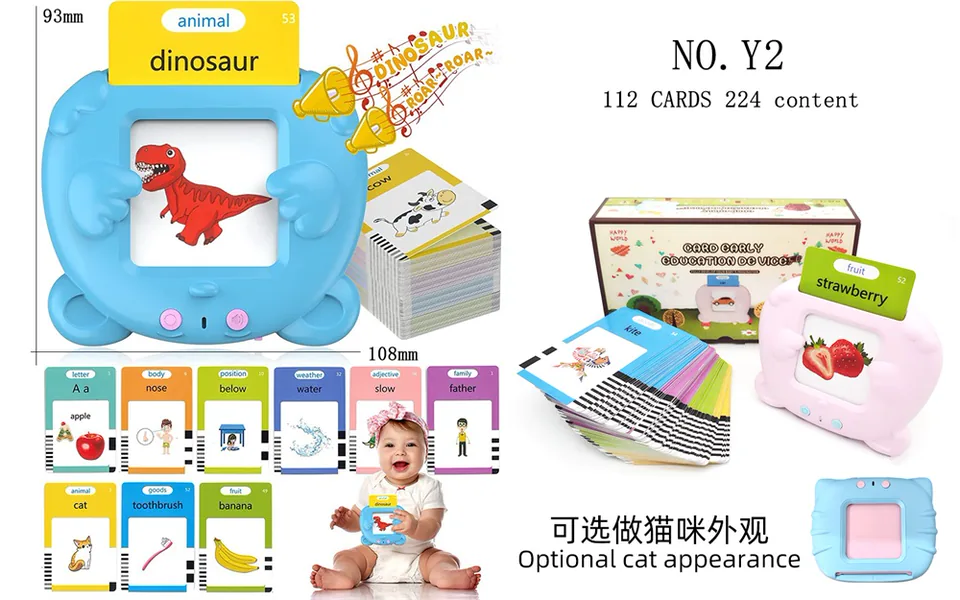
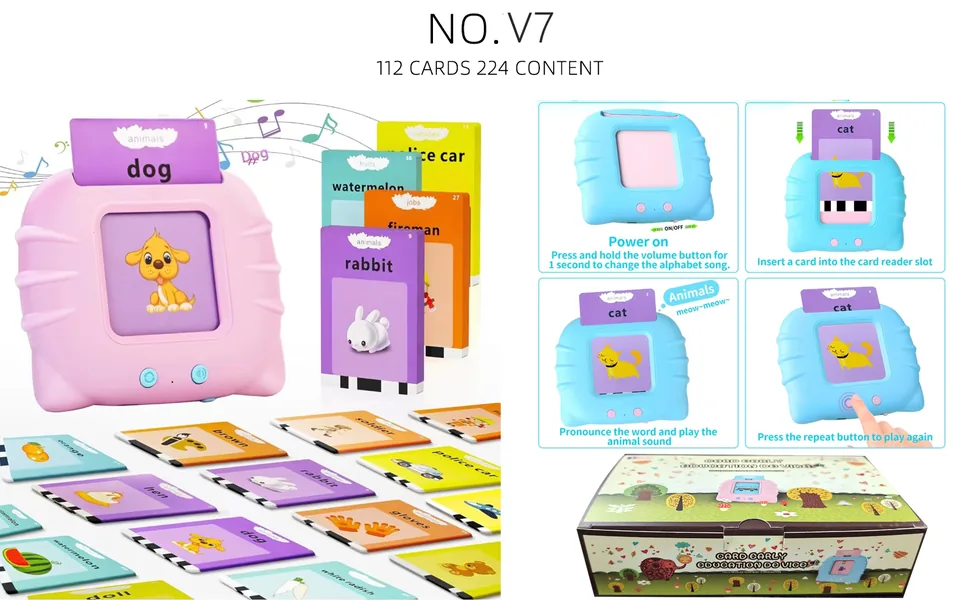
A wholesaler buys bulk inventory from manufacturers—often taking title to the goods—and resells to retailers or other businesses at a markup. They hold physical stock in a warehouse (in Ningbo, Yiwu, Shenzhen, or a US 3PL) and can ship within days. MOQs are relatively low: you can often buy 60–120 units of a standard SKU like a cat-themed 112-card set without any customization. The trade-off is price. That same Cat Educational Flash Cards unit that costs $1.86 ex-factory at 60 pieces will run higher through a wholesaler who has already padded in warehousing and financing costs.
A distributor operates differently. They typically hold an exclusive territory agreement with a brand or factory, handle importation and compliance in the destination market, and sell to retailers with localized packaging and marketing support. If you are a US boutique chain that wants Spanish-language voice prompts on the flash card reader, a distributor who has already funded that localization is your fastest path. But you pay a premium—often 35–55% above FOB—and you are locked into their SKU assortment.
Then there's the trading company, the most common sourcing partner for hybrid electronic-paper products. A Shenzhen- or Shantou-based trading company aggregates production across a paper-printing subcontractor and an electronics assembly subcontractor, manages the EN71/ASTM/CPC certification bundle, and sells under its own export license. They don't own a factory, but they coordinate one. This model dominates educational flash cards because few single factories do both die-cut card printing and SMT board assembly under one roof. The risk is opacity: you need to audit who is actually making your battery housing, because that subcontractor's process controls determine whether the battery compartment survives the 0.5 N·m torque test in EN62115 clause 14.4.
One more channel worth mentioning—especially for 2026—is the factory-direct route from China's toy manufacturing clusters (Chenghai, Shantou; Yunhe, Zhejiang). If your order exceeds 3,000–5,000 units and you have a QC partner on the ground, going factory-direct on a custom OEM flash card set can cut unit costs by 15–25% versus a trading company. But you absorb every compliance burden yourself—and for a product with a lithium battery, that means IEC 62133 cell test reports, UN38.3 transport certification, and a Children's Product Certificate (CPC) backed by CPSC-accepted lab results. Factory-direct is not a shortcut; it's a responsibility transfer.
How to Find Them: Three Channels That Actually Deliver Compliant Inventory
Finding suppliers who understand hybrid paper-electronic educational products takes more than a Google search. Here are the channels that produce vetted leads.
B2B marketplaces with verification layers. Alibaba.com remains the starting volume play, but the signal-to-noise ratio for battery-included learning cards is poor—you will wade through dozens of suppliers who only do paper printing and blindly list 'electronic' in the title. Filter for 'Verified Supplier' plus 'Assessment Report' (the onsite check by third parties like SGS or Bureau Veritas). Then filter further by management certifications: ISO 9001 is table stakes; a supplier holding ISO 14001 or a Sedex SMETA audit report signals the process maturity to handle chemical compliance documentation for paper coatings and ABS resin. On Made-in-China.com, search in the 'Educational Toy' subcategory and look for suppliers who explicitly list EN71 and ASTM F963 in their company profile—not just in a generic product description.
Trade shows with compliance-filtered exhibitor lists. The Hong Kong Toys & Games Fair (January and October) and the Canton Fair Phase 2 (April/October) remain the highest-density sourcing environments for educational flash cards. The advantage is tactile: you can feel the card stock weight (200–350 gsm is standard for durability in small hands; anything below 180 gsm will dog-ear within weeks), test the card reader's slot tolerance, and hear the speaker quality yourself. Before the show, download the exhibitor list and pre-filter for booths that list 'electronic learning aids' or 'early education machines.' Cross-reference with the Hong Kong Trade Development Council's (HKTDC) supplier verification database. A 2026-specific trend: an increasing number of Chenghai-based flash card manufacturers are exhibiting at the Shenzhen International Toys & Education Fair (typically March), which is becoming the go-to show for OEM educational electronics.
Sourcing agents with category expertise. If your order value exceeds $15,000, an agent who specializes in educational electronics in Shantou or Shenzhen will pay for themselves in defect avoidance. A competent agent maintains a pre-audited factory database, understands that card-cutting tolerances matter as much as PCB soldering quality, and can run a pre-shipment inspection that checks both AQL 2.5 for the printed cards and a functional battery-cycle test on the reader unit. The eight-point supplier audit framework—qualification, capacity, technical capability, quality control, certifications, social responsibility, financial health, and cooperation attitude—is exactly what a good agent applies before introducing a factory to you. Ask any prospective agent to show you a redacted audit report from a previous educational toy project; if they cannot, keep looking.
How to Evaluate Partners
| Certification documentation | Request the full EN71 test report PDF (Parts 1, 2, 3) and—for US-bound goods—the ASTM F963-23 report plus the CPC. For the battery component, demand the IEC 62133-2 cell test certificate and the UN38.3 transport test summary. Check that the report covers the exact model number you are buying, not a 'similar' product. |
|---|---|
| Battery safety and transport compliance | Verify that the battery is accessible only by tool (EN62115 clause 14.2). Confirm the supplier has a Dangerous Goods (DG) shipping contract for lithium batteries—this affects whether your freight forwarder can accept the cargo without surcharges. Ask for the MSDS (Material Safety Data Sheet) of the exact battery cell. |
| Card material and print durability | Request a material specification sheet showing card stock gsm, lamination type (gloss vs. matte), and whether the ink is soy-based and saliva-resistant (critical for under-3 users under EN71-3). Order a pre-production sample and perform a slobber test: rub a damp cloth on the card surface 20 times and check for ink transfer. |
| Retail-ready packaging and transit testing | If you sell via Amazon FBA or big-box retail, the color box must pass ISTA-6-Amazon.com (SIOC) testing. Ask whether the supplier has drop-test video evidence at 91 cm (the standard Amazon drop height for packages under 9 kg). The box should include a clear age grade (e.g., '3+'), the CE/UKCA mark, the importer-of-record address, and small-parts warning as required. |
| MOQ and pricing posture | For standard-OEM flash card sets (your logo on an existing mold), expect MOQs of 60–120 units per SKU for models using existing ABS reader housings. For full-custom card content and packaging, MOQs typically jump to 1,000–3,000 units. For a new reader mold, expect 3,000–5,000 units and a tooling amortization schedule. |
| Lead time realism | Standard OEM flash cards (existing mold, custom print): 25–35 days. Full-custom content with new voice recordings: 35–50 days including audio scripting and speaker tuning. New reader housing mold: add 20–30 days for tooling fabrication and T0 sample approval. Always negotiate a penalty clause for delay exceeding 15 days. |
Build & Maintain the Relationship: Three Practices That Prevent Defect Surprises
Supplier relationships in educational electronics erode quietly—through slow tolerance drift on card thickness, through a battery supplier substitution that nobody told you about, through a packaging adhesive change that now off-gasses inside the color box. Here is how to build a relationship that catches these shifts before they become a rejected container.
Lock the BOM at order confirmation. A bill of materials (BOM) for a flash card set includes the card stock supplier and gsm, the lamination film supplier, the ABS resin grade for the reader housing, the speaker driver model, the battery cell manufacturer and capacity, and the packaging adhesive. Have the supplier sign this BOM as an annex to your purchase order with a clause stating that any substitution requires your written approval plus a new pre-production sample. The most common causes of batch-to-batch quality variation—coating odor, speaker rattle, battery life under-delivery—trace back to an undocumented BOM change. This practice aligns with the principle of using a single batch of raw materials and paint for consistency.
Run a golden sample program. After you approve the pre-production sample, the supplier produces two additional 'golden samples' sealed in a tamper-evident bag and signed by both parties. One stays with you, one stays with the QC inspector who will conduct the pre-shipment inspection. At inspection, the inspector opens the golden sample and does a side-by-side comparison—same card flex stiffness, same audio volume at 50 cm, same color-box print registration. Without a golden sample, 'acceptable' drifts with every order.
Schedule a post-first-order debrief. After your first shipment lands and clears customs, schedule a 30-minute video call with the supplier's production manager—not just the salesperson. Walk through every issue: packaging scuffs on 3% of units, a two-day delay in the forwarder pickup, card misalignment on 1% of sets. Frame it as a joint process-improvement conversation, not a blame session. Suppliers who engage substantively in this debrief are the ones who will prioritize your reorders. Those who deflect or blame the forwarder are signaling that your business is transactional to them.
Supplier Evaluation Checklist: What to Confirm Before You Sign the PI
This checklist draws on the eight-point audit framework adapted for educational flash cards. Before you sign a proforma invoice, confirm each item with documentary evidence—not a verbal assurance.
Qualification audit: Is the business license valid and does it cover 'toys' and 'electronic products' as permitted export categories? For battery-inclusive products, is the exporter registered with the local dangerous goods authority?
Capacity audit: What is the monthly output of the card printing line (in sheets or sets)? What is the monthly PCB assembly capacity? If the supplier subcontracts either process, who is the subcontractor and have you seen their audit report?
Technical capability: Does the in-house engineering team have experience tuning speaker enclosures for children's products (clarity at low volume matters for language learning)? Can they handle the audio file format you need (MP3, WAV, OGG) and the memory chip programming in-house?
Quality control: Do they maintain a QC checklist for incoming card stock (gsm tolerance, whiteness, moisture content)? For the reader unit, do they test 100% of assembled units for power-on, button function, and speaker output, or only a sample? Ask to see a blank QC inspection form for the exact product category.
Certifications: Are the EN71 and/or ASTM F963 certificates valid (check the expiry date and the accredited lab's scope of accreditation)? For the battery, is there a valid IEC 62133 test report from a CBTL (CB Testing Laboratory)?
Social responsibility: If you are supplying EU retailers subject to the German Supply Chain Due Diligence Act (LkSG) or the upcoming EU Corporate Sustainability Due Diligence Directive (CSDDD), does the supplier hold a Sedex SMETA 4-pillar audit or an amfori BSCI audit with a valid report?
Financial health: Request a credit report through a service like Dun & Bradstreet or a China-based credit agency. A supplier in financial distress will cut corners on materials first—usually starting with the battery cell, which is the hardest component for a buyer to inspect quickly.
Cooperation attitude: How did they handle the sample request? Did they ship promptly with all requested documentation, or did they push back on providing the EN71 report? Their responsiveness during the sampling phase is the best predictor of their behavior during a production crisis.
FAQ: What Buyers Ask Before Sourcing Educational Flash Cards
What MOQ should I expect for custom-printed educational flash cards with a branded reader?
Standard-OEM (your logo on an existing reader mold, custom card artwork): 60–120 units per SKU. Full-custom content with new voice recordings and unique packaging: 1,000–3,000 units. A new ABS reader housing mold: 3,000–5,000 units plus a separate tooling cost amortized over the first production run.
Which safety certifications are mandatory for battery-powered flash cards sold in the US and EU?
EU: EN71 Parts 1 (mechanical), 2 (flammability), and 3 (migration of certain elements), plus EN62115 for electric toy safety. US: ASTM F963-23 and a Children's Product Certificate (CPC) backed by CPSC-accepted lab testing. The lithium battery itself requires IEC 62133-2 cell certification and UN38.3 transport test documentation regardless of destination market.
What is a realistic lead time for a first order of custom flash cards?
Standard-OEM with existing tooling and custom print: 25–35 days from PI confirmation. Adding new voice recordings: 35–50 days (audio scripting, recording, chip programming, speaker matching). A new reader housing mold adds 20–30 days for tooling fabrication and T0 sample approval before production begins.
How do I verify that the card stock is safe for children under 3?
Request the EN71-3 test report, which measures migration of 19 heavy metals from the card surface and coating. Also request the material specification showing ink type—soy-based inks are standard for mouthing-age products. Conduct a slobber test on a pre-production sample: rub a damp white cloth on the card surface 20 times. Any visible ink transfer is a fail regardless of what the certificate states.
What packaging requirements apply if I plan to sell on Amazon FBA?
The color box must pass ISTA-6-Amazon.com SIOC testing, including a 91 cm drop test for packages under 9 kg. The box must display the age grade (e.g., '3+'), the appropriate safety mark (CE/UKCA for EU/UK), the importer-of-record name and address, and the small-parts warning if applicable. Plain white mailers will not survive Amazon's inbound receiving process without damage.
Can I source educational flash cards factory-direct from China, and when does it make sense?
Factory-direct is viable when your order exceeds 3,000–5,000 units and you have an independent QC partner on the ground in Shantou or Shenzhen who can audit both the paper and electronics subcontractors. For smaller volumes, a trading company that aggregates production and manages the EN71/ASTM compliance bundle under its own export license is usually more cost-effective once you factor in the compliance burden you absorb going factory-direct.
Related Products & Categories
Request a Quote for Compliant Educational Flash Cards
RanToys supplies EN71- and ASTM-certified educational flash cards with built-in battery modules and retail-ready packaging. Proven SKUs include the Cat Educational Flash Cards (112 cards, 224 sight words, 3.7V rechargeable battery) with MOQs starting at 60 units—ready for logo and packaging customization. Submit your RFQ with target market, quantity, and OEM requirements to receive a proforma invoice with lead time, certification documentation, and packaging specs within 48 hours.