Infant plush toys wholesale lives or dies on one day: the sample approval visit. If a factory cannot show you a signed, version-controlled pre-production sample plus the test report that names your exact design, do not release a bulk order — approve the sample in writing or walk. This page covers a single factory visit in sequence: which document you ask for at the door before anything else moves, what you open and inspect on the sample itself, and which records must leave the building in your bag.
At the door: which document do you check first?
Ask for the pre-production sample record before the tour, because the tour is theater until the sample is pinned. What you want in hand: the sealed or signed sample for your SKU, its version number, and the approval date — the same sample that will define bulk acceptance. If the factory cannot produce a signed sample tied to your design, stop the visit there. A verbal "we already made it" is not a production standard.
For an infant plush item, the second document is the test report and the certificate that sits behind it. According to the US Consumer Product Safety Commission (CPSC), children's toys generally require testing at a CPSC-accepted laboratory and a Children's Product Certificate — a CPC is product-specific and built from passing test results, so it should name the product and the applicable rules, not the factory as a whole. The applicable US toy standard is ASTM F963, incorporated through 16 CFR Part 1250; a report should identify the product configuration, age grade and standard edition. In the EU, the relevant framework is Toy Safety Directive 2009/48/EC with EN71-related testing, and the CE marking and EU Declaration of Conformity must match the product scope. Ask which market the report was issued for; a report for one market does not transfer to another.
Two content checks belong at the door because they are the recall patterns that keep repeating in 2026. First, button and coin cell batteries: recent US recalls have involved battery compartments that children could access, and packaging missing the warnings required under Reese's Law. Second, loose high-powered magnets: multiple 2026 recalls cover magnet sets and magnet-equipped toys where magnets detached or fit inside the small parts cylinder, creating an ingestion hazard. If your plush design includes a sound module, a light, or a magnetic closure, ask for written confirmation of how the battery or magnet is secured and labeled. If the answer is vague, that is your answer.
One more gate: age grade. A product name that says "baby" or "toddler" is marketing copy, not an age grade. Ask the factory to state the age grade it is producing to, in writing, because age grade drives which rules apply, which warnings and labels go on the packaging, and how small parts and detachable components get reviewed. If the factory cannot state the age grade for an infant plush item, the sample review has no baseline.
On the sample: what do you open and check?
Open the sample on a neutral surface and work in a fixed order so nothing gets skipped. Start with the appearance against your artwork and color reference: shape, proportion, head-to-body ratio, eye spacing and height, ear symmetry, limb direction, and embroidery density. Then construction: seam strength, stitch density, filling distribution, loose threads, accessory attachment, label placement, and closure points. Finally, measure. Record numbers rather than opinions — height, width, eye spacing, weight — and write the tolerance next to each one, because hand-sewn plush has a reasonable deviation range and "close enough" is not a spec.
Fabric and filling are where quotes diverge. Confirm the actual fabric type (short plush, long plush, velboa, minky, fleece, cotton) and check hand feel, pile direction, colorfastness, and shedding. For filling, ask the grade and the fill amount, not just "polyester fiber." Two samples that look identical in a photo can differ in pile length, stretch, and fill density — and those differences change the finished shape even when the pattern is unchanged.
Give feedback in measurable terms. "Make the face cuter" produces three different samples on the next round. "Move both eyes inward by 2 mm, lower the mouth by 3 mm, and add 5 g of filling per cheek" produces one. Mark the photos, number the comments, and keep them attached to the sample version so the next revision is traceable.
For infant plush specifically, do the attachment and small-parts pass by hand. Tug the eyes, nose, ribbons, tags, and any decorative part, and treat anything that can detach on an item intended for the youngest users as a finding, not a note. Embroidery is often preferred over small plastic parts on baby plush for exactly this reason. If the sample contains a battery compartment or a magnet, check accessibility and packaging warnings on the physical sample, not in the spec sheet.
Then ask the question that ties it together: "If I sign this sample today, what exactly is the factory allowed to change in bulk?" Anything not written down — a substitute lining, a different embroidery thread, a fill reduction — is something that can drift. Sample approval is the moment to lock materials, dimensions, colors, and safety requirements, and the moment to say what is not acceptable.
Before leaving: which records must you take?
Leave with paper, not impressions. At minimum: your copy of the signed/sealed sample with its version number and date; the approval comments you submitted, numbered and dated; the test report and certificate, matched to the product, age grade, and market; and the packaging and labeling spec including barcode, carton marks, and any required warnings. If any of these does not exist yet, write "unknown" against it in your visit notes and treat it as an open item — not a pass.
Also take the acceptance standard you will inspect bulk against: the defect classification that defines critical, major, and minor defects in your quality agreement, plus the measurement tolerances and the inspection benchmark the factory uses. A bulk order without a written acceptance standard is a dispute waiting for a shipping date. If the factory only speaks in informal language about "good quality," convert it to defined defect classes before you order.
Two more documents protect you after the visit. First, the material and sub-supplier record: fabric composition, filling grade, and any battery or magnet component source, so a silent substitution is detectable. Second, the change-control rule: how a revised drawing, pattern, or sample version is linked to the production order, so an old file cannot quietly return to the line.
Chenghai and Shantou in Guangdong remain the deepest plastic and plush toy cluster in China, which is why so many toy factories there can quote fast and sample fast. That density is an advantage for sourcing — and a reason to verify rather than assume, because proximity to suppliers is not evidence of process control. The same discipline applies to Yiwu, which is stronger on small trading quantities and mixed orders than on controlled infant-plush manufacturing. Judge the factory on documents and the sample, not on the city it sits in.
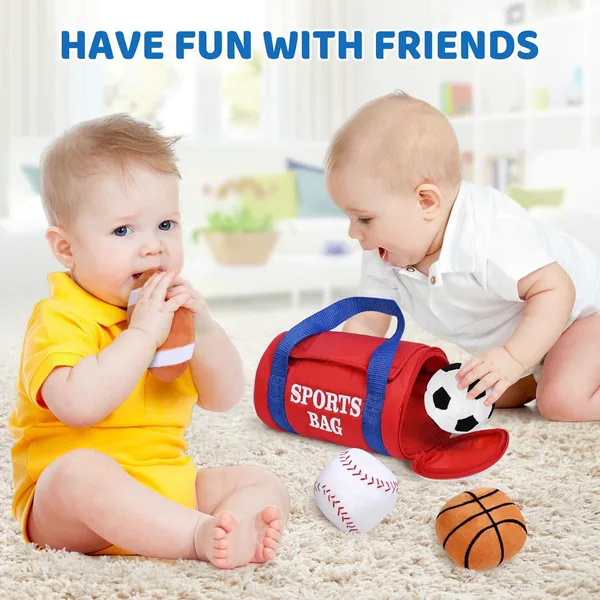
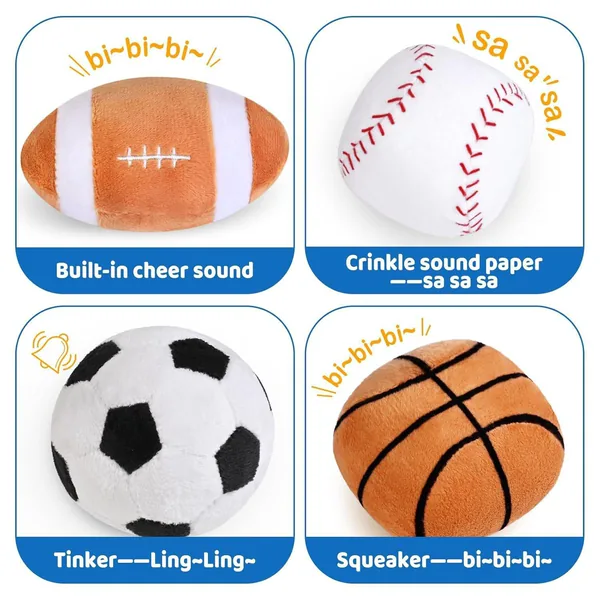
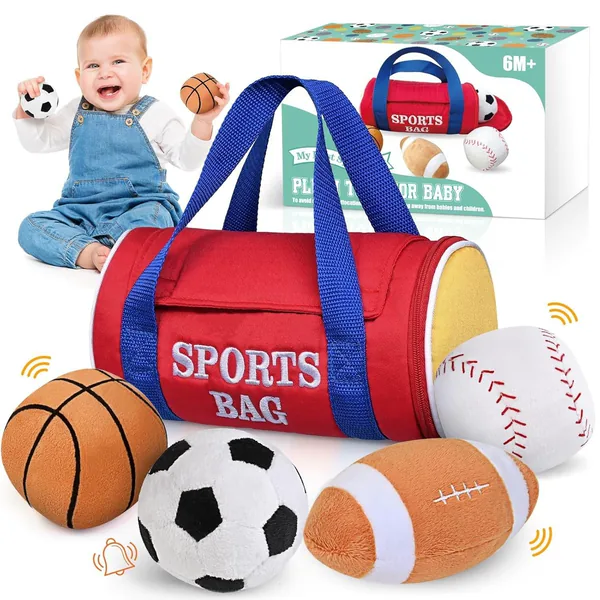
If you are building a nursery or gift program that mixes plush with other infant items, the same sample-approval logic applies across the assortment — for example, a Baby Sports Bag Stuffed Plush Play Set is the kind of soft plush item that should be approved against the same written checklist as any other infant SKU in the range. Factories that can supply the sample record and test documents alongside the quote — RanToys is one example — make that checklist easier to run, but the documents, not the supplier name, are what you approve against.
FAQ
What is the single most important document to check on a plush factory visit?
The signed, version-controlled pre-production sample for your exact design, because it becomes the bulk acceptance standard. Without it, the test report and the pricing discussion have no anchor.
Do I need a test report and a CPC for infant plush toys sold in the US?
Yes — according to the CPSC, children's toys generally require testing at a CPSC-accepted laboratory and a Children's Product Certificate, which is built from passing test results and names the product and applicable rules. A CPC is product-specific and should not be treated as a blanket factory certificate.
What safety framework applies in the EU?
Toy Safety Directive 2009/48/EC, with EN71-related testing, plus CE marking and an EU Declaration of Conformity matched to the product scope. The General Product Safety Regulation (EU) 2023/988 is a separate instrument, so map your importer and product-identification duties separately.
Should I ask about batteries or magnets in an infant plush item?
Yes. Recent US recalls have involved accessible button and coin cell batteries and loose high-powered magnets that pose ingestion hazards. Ask the factory to confirm in writing how any battery compartment or magnet is secured and whether the required warnings are on the product and packaging.
Can I approve a sample that was made with substitute fabric?
Be cautious. A sample made with substitute fabric can differ in pile length, thickness, stretch, shade, and hand feel, which changes the finished shape even with the same pattern. Approve against bulk-intended materials where possible, and record the fabric spec in the approval.
What should I leave the factory with if some documents are missing?
Leave with your visit notes marking each missing item as unknown and open, not as passed. Then either request the document before production or hold the order — an unverified document is not a verified one.
Sources
- Custom Plush Manufacturer Checklist: What EU/US Importers Verify Before Ordering
- Custom plush toy quality inspection standards: key points for procurement and verification by yangzhou zhiduo wa toys co
- How Do Bulk Buyers Work with a Plush Toy Manufacturer
- How to Order Custom Plush: Cost, MOQ, Samples, Lead Times
Request a quote or a factory audit
Send your artwork, target size, age grade, quantity by SKU, target market, packaging format, and delivery date, and ask for the sample record and test documents with the quote. If you want the visit done against the checklist above — door documents, sample inspection, and the records you take away — request a factory audit and the line can be walked with you.