Choose a silicone or TPR teether for a low-cost, sensory-focused item in infant gift sets; choose a wooden toy if you target 1–3 year olds and want a natural-material story. This guide compares six real product options on materials, MOQ, and the evidence you must request before committing. You will learn how to verify performance claims, what to ask about compliance, and how to structure an RFQ that gets you usable answers.
Key Takeaways
- For infant teethers, request the TDS and check Shore A hardness; without it you cannot verify grasp-training resistance or gum comfort.
- For magnetic building blocks, confirm magnet encapsulation and pull force; ASTM F963 has specific requirements to prevent ingestion hazards.
- For wooden toys, ask for the coating type and confirm lead-free and phthalate-free certification; mouthing is a primary behavior for 1–3 year olds.
- A sealed golden sample, not a photo, is the only reliable reference for colour, fit, flash, and function before mass production.
- Include a freeze calendar on your PO for colour, warning labels, and carton markings to avoid seasonal shipping delays.
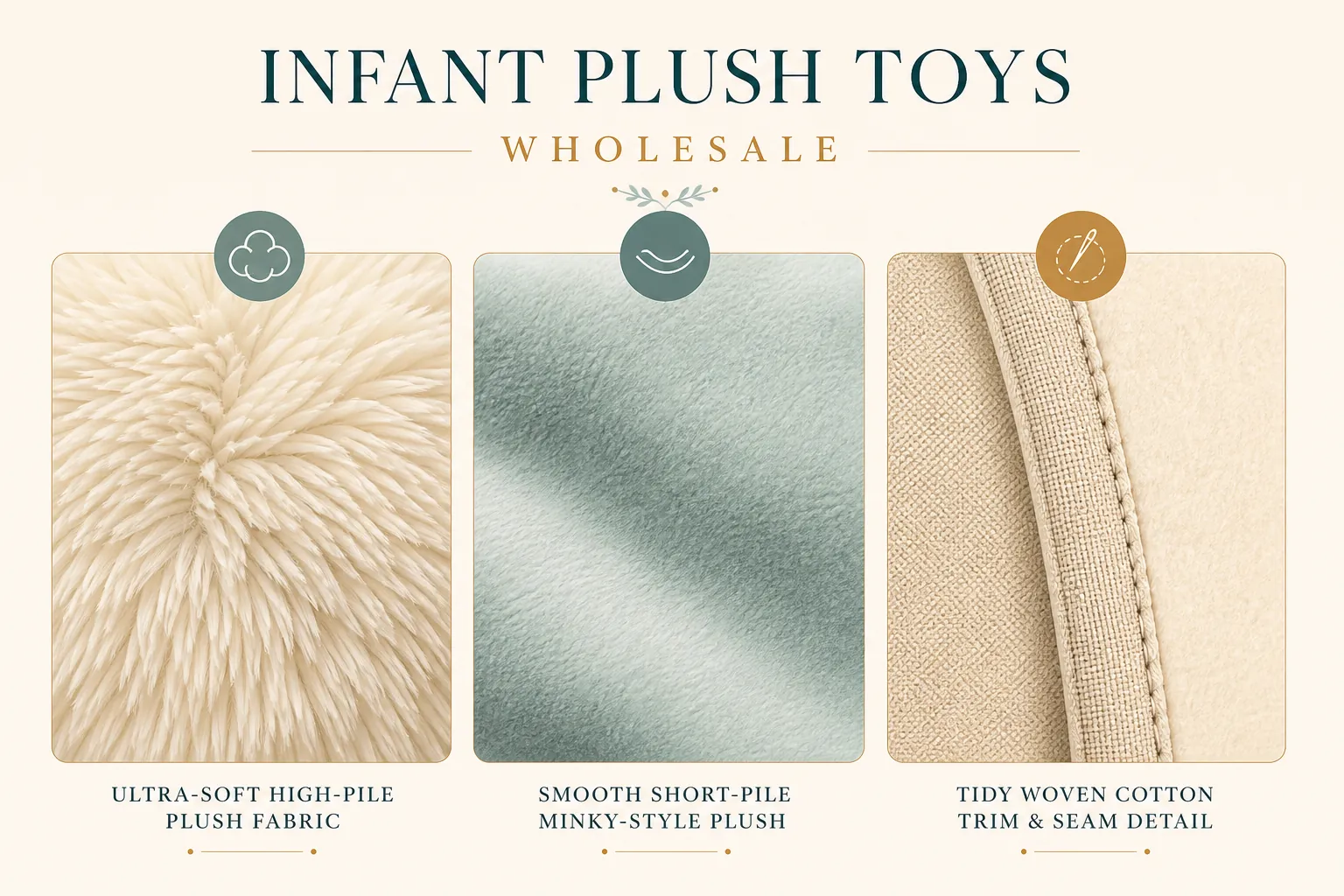
Infant Plush Toys Wholesale: Product Comparison
| 10 in 1 Baby 2PCS Teething Toys (Silicone) | Price $2.32, MOQ not stated, material silicone. Best for low-MOQ trials. Ask for TDS Shore A and ASTM F963 status. |
|---|---|
| TOYS Infant Space Soft Silicone Teether (TPR) | Price $2.12, MOQ 360, material TPR. Good for larger orders. Ask for TDS Shore A and food-contact compliance. |
| STEM 156pcs Magnetics Tiles (Plastic) | Price $15.30, MOQ 16, material plastic. Premium price, low MOQ. Verify magnet encapsulation and ASTM F963 magnet requirements. |
| 40pcs Magnetic Building Blocks (Plastic) | Price $2.60, MOQ 40, material plastic. Cost-effective for stacking. Confirm magnet strength and small-parts compliance. |
| 32pcs Digit Blocks (Metal) | Price $3.95, MOQ 216, material metal. Adds number recognition but metal raises safety review needs for infants. Ask for age grading. |
| Wooden Baby Intellectual Development Toys | Price $5.45, MOQ 60, material not stated. Natural-material story. Verify paint safety and splinter risk with EN71/ASTM reports. |
How to verify performance before you trust the copy
Performance claims for infant plush toys must rest on measurable data, not adjectives. For silicone and TPR teethers, the critical number is Shore A hardness. The product data lists materials but no hardness values. Ask the supplier for the TDS and check the Shore A row. If the value is missing, request it explicitly. A teether that is too soft may not provide adequate resistance for grasp training; too hard may be uncomfortable for an infant's gums. Without the TDS, you cannot verify either.
For magnetic building blocks, the performance risk is magnet strength and encapsulation. The product data lists materials but no magnet specifications. Ask for the pull force in gauss or kilograms, and confirm the magnets are fully encapsulated to prevent ingestion. ASTM F963 has specific requirements for magnets in toys; the CPSC chart is the official reference. If the supplier cannot provide a current test report, treat the product as unverified.
For the wooden toy, the performance question is finish safety. Ask for the coating type and confirm it is lead-free and phthalate-free. Request the EN71 or ASTM F963 test report for the specific product. Without it, you cannot confirm the paint is safe for mouthing, which is a primary behavior for 1–3 year olds.
Sample to mass: the sealed golden sample is your only proof
The sealed golden sample on the QC shelf is the only proof that ends a colour fight. For infant plush toys, where colour and texture are part of the sensory experience, a photo approval is not enough. Before mass production, request a physical sample and compare bulk against it: colour, fit, flash, function. If the supplier refuses a sealed sample, that is a red flag.
The same discipline applies to seasonal programs. A late colour freeze misses the vessel. For infant toys, the freeze date should also cover warning labels and carton markings. Ask the supplier for a freeze calendar on the PO: colour, warning, carton. This turns a vague timeline into a contractual checkpoint.
Retail-ready packaging and pieces-per-carton data matter for mixed-container importers. When you move from sample to mass, confirm the packaging is consistent with the sample and that the carton count matches your packing list. Any deviation means the sample was not the true reference.
Compliance box: what to request for the U.S. market
For infant plush toys sold in the U.S., ASTM F963 is the mandatory toy safety standard. According to the CPSC chart, sections 4.27 (stuffed and bean bag-type toys), 4.3.7 (stuffing materials), 4.6 (small objects), and 4.14 (cords, straps, and elastics) require third-party testing by a CPSC-accepted laboratory. Buyers should request a Children's Product Certificate (CPC) and current test reports for these sections. Small batch manufacturers may have relief from third-party testing but still must provide a CPC. Also confirm tracking labels are sewn into the product, not just on packaging.
FAQ
What is the Shore A hardness of the silicone/TPR teether, and can you provide the TDS?
The product data does not list Shore A values. You must ask the supplier for the TDS and check the hardness row. Without it, you cannot verify grasp-training resistance or gum comfort.
Do you have ASTM F963 or EN71 test reports for the specific product, and are they current?
Compliance status is not provided in the product data. Request current test reports from a CPSC-accepted lab for the specific SKU. For the U.S., ASTM F963 sections 4.27, 4.3.7, 4.6, and 4.14 require third-party testing.
What is the MOQ for the 10-in-1 teether, and can you offer a sample before bulk order?
The MOQ for the 10-in-1 teether is not stated in the product data. Ask the supplier directly. Always request a physical sample before mass production to verify colour, fit, and function.
For magnetic blocks, what is the magnet strength and are they encapsulated to prevent ingestion?
Magnet strength and encapsulation quality are not provided in the product data. Ask for pull force in gauss or kilograms and confirm the magnets are fully enclosed. ASTM F963 has specific requirements for magnets in toys.
For the wooden toy, what type of paint/coating is used, and is it lead-free and phthalate-free?
The coating type is not provided. Request the EN71 or ASTM F963 test report and confirm the finish is lead-free and phthalate-free. Mouthing is a primary behavior for 1-3 year olds, so finish safety is critical.
Can you provide a sealed golden sample for color and function approval before mass production?
Yes, you should request a sealed golden sample. In Chenghai, the sealed sample on the QC shelf is the standard reference for bulk comparison. Photo approval is not sufficient for colour or texture-sensitive products.
Sources
Request a Quote
Ready to spec your infant plush toys wholesale order? Contact us with your target market, age band, and quantity, and we will send you product options with the evidence you need to decide.