Choose a China Montessori toy supplier if you can get carton-level data before you commit to units; choose a domestic or regional wholesaler if you need pallet-quantity flexibility inside 30 days. The practical decision rule for a baby-boutique or early-learning shelf program is this: never approve a Montessori toy purchase order on a unit MOQ alone — approve it on case pack, carton dimensions, CBM, and a SKU-matched compliance file. That single discipline is what separates a shelf program that reorders cleanly from one that eats margin in freight and relabeling.
What follows is a procurement guide for US and EU import programs: how to read a factory MOQ, convert it into cartons and container space, what a case pack actually contains for a baby-product buyer, and how to verify a Chinese supplier before the first PO. It is not a product ranking.
What a Baby-Product Buyer Should Decide Before Ordering
- A unit MOQ is not a case pack. A factory can quote a 60-piece minimum while the carton holds 36 pieces, which forces a 72-piece order to avoid a broken carton — ask for pieces per carton on the same line as the MOQ.
- Case pack drives landed cost more than unit price does for bulky Montessori items. A shape-sorting or busy-board carton is volume-heavy; two suppliers at the same FOB unit price can differ by double-digit percentages per CBM.
- Compliance is SKU-specific, not factory-wide. A Children's Product Certificate (CPC) identifies the product and the applicable CPSC rules, so a blanket 'we are certified' statement tells you nothing about the item you are buying.
- Small-parts and age grading are case-pack decisions, not just design decisions. If the item is intended for children 12 or younger, US rules generally require third-party testing at a CPSC-accepted lab and a CPC.
- The RFQ that gets a same-week, usable quote names the SKU, target market, quantity in units, package format, certificate need, and delivery terms. Vague inquiries get vague quotes.
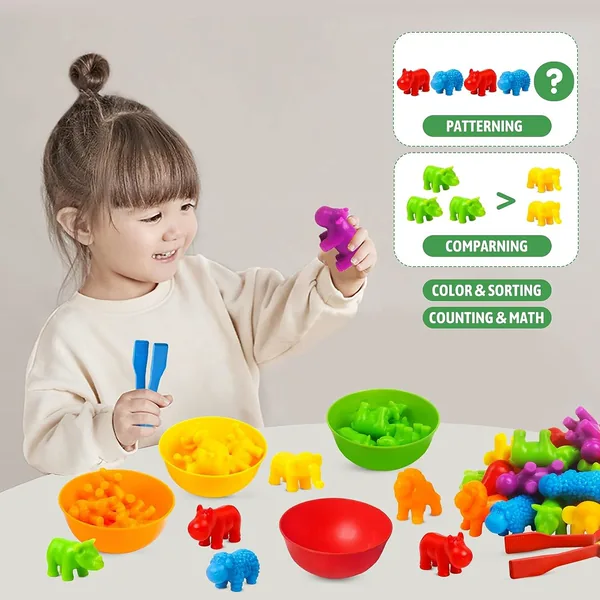
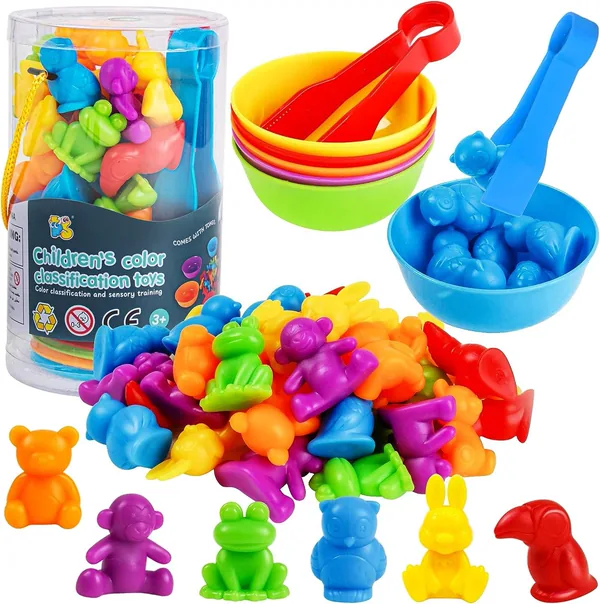
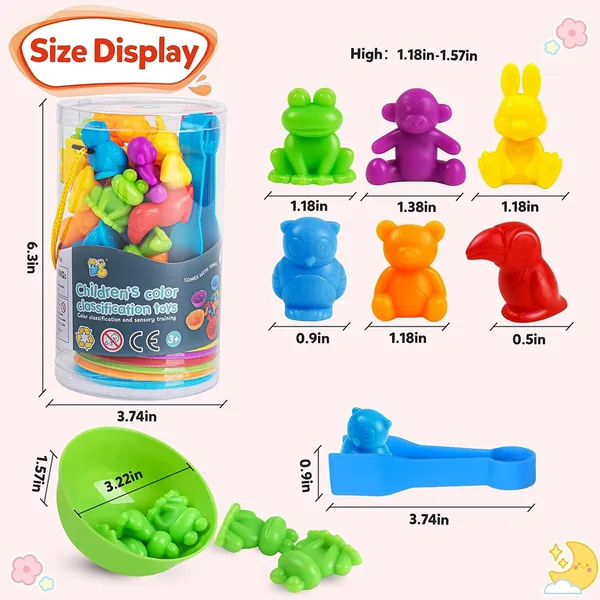
Manufacturer and Origin Comparison for Montessori Toy Sourcing
| Chenghai / Shantou, Guangdong — plastic and ABS educational toy factories | Specialty: plastic, ABS and electronic early-learning sets, sorting and matching toys, busy boards. MOQ: varies by spec; confirm per SKU. Origin: Chenghai, Shantou, Guangdong. OEM/ODM: commonly offered; scope must be defined in the contract. Certifications: ask for SKU-level EN71 or ASTM/CPSIA test reports and CPC where applicable. |
|---|---|
| Dongguan / Shenzhen, Guangdong — custom and premium Montessori lines | Specialty: premium wooden and custom-designed Montessori materials. MOQ: varies by spec. Origin: Guangdong. OEM/ODM: ODM and private label common. Certifications: varies by spec; request per-SKU reports. |
| Yiwu and Zhejiang wholesale houses | Specialty: broad low-cost educational and wooden assortments, mixed-item wholesale. MOQ: varies by spec; often carton-based. Origin: Yiwu, Hangzhou, Ningbo. OEM/ODM: OEM limited; private label possible. Certifications: varies by spec; verify report ownership and lab identity. |
| Jiangsu / Fujian wooden-toy specialists | Specialty: eco-friendly and non-toxic wooden toys, bamboo and rubberwood. MOQ: varies by spec. Origin: Suzhou, Nanjing, Yangzhou, Fujian. OEM/ODM: ODM common. Certifications: ask for FSC or equivalent material documentation plus EN71/ASTM per SKU. |
| Domestic or regional wholesaler (US/EU) | Specialty: mixed Montessori assortments, no import burden. MOQ: varies by spec; typically low, pallet or case level. Origin: US or EU. OEM/ODM: rarely. Certifications: product should already carry the destination-market documentation. |
How do you convert a factory MOQ into a case pack and a container plan?
Start from the carton, not the unit. Ask for four numbers per SKU: pieces per carton, carton dimensions in centimetres, gross and net weight, and CBM per carton. Divide your target unit volume by pieces per carton, round up, and compare the result to the MOQ. If the MOQ is expressed in cartons, multiply by pieces per carton to get the true unit commitment.
A 20GP holds roughly 28 CBM usable and a 40HQ roughly 68 CBM usable in practice, but those are planning figures — never quote them as guarantees. Multiply CBM per carton by carton count and see whether your assortment fills or underfills the box. Underfilled containers are where Montessori programs lose money, because bulky sorting and stacking toys consume volume without consuming weight.
Two structural questions decide most case packs. First, is the pack a retail-ready shelf unit or an inner carton that the retailer will break? A retail-ready display changes artwork, dimensions and often the carton count. Second, does the packaging include film or bags that fall under plastic-film or suffocation-warning rules in your destination market? If yes, that requirement lands on the packaging spec, and the spec should be frozen before mass production rather than after.
If carton data changes because artwork changed, the old numbers are dead. Reconfirm case pack and carton data after every packaging revision — carrying forward superseded carton figures into a new artwork version is a reliable way to mis-plan freight.
Case-Pack Planning Worksheet: What to Confirm Per SKU
| Unit MOQ | confirm per SKU — published catalog MOQs range from low double digits to several hundred pieces depending on item and material |
|---|---|
| Pieces per carton (case pack) | confirm per SKU; not derivable from MOQ |
| Carton dimensions (L×W×H, cm) | confirm per SKU |
| Gross / net weight per carton (kg) | confirm per SKU |
| CBM per carton | confirm per SKU |
| Total cartons, total CBM, total gross weight for the PO | calculated from the confirmed values above |
| Package format (brown box, colour box, display, polybag) | confirm; retail-ready vs break-pack changes artwork and carton count |
| Barcode, shipping mark, warning label fields | confirm against destination-market labeling rules |
| Destination-market compliance file | request SKU-level test report and CPC (US) or EU Declaration of Conformity / EN71 evidence (EU) where applicable |
| Sample approval method | sealed golden sample retained by both parties as the bulk reference |
| Inspection plan and defect classes | define critical / major / minor defects in the quality agreement, not in informal messages |
| Incoterm and risk transfer point | state FOB, EXW or other term; note that Incoterms do not define product-safety compliance or report ownership |
What questions should a retailer ask before requesting a wholesale quote for Montessori toys?
Ask for the carton, not the catalogue. The first four questions to any Montessori toy supplier are: pieces per carton, carton dimensions, CBM per carton, and gross weight. If those are unavailable, the quote is not yet comparable with another supplier's quote.
Then ask the compliance question in a way that cannot be answered with a slogan. 'Which test report covers this exact SKU, which lab issued it, which standard edition does it cite, and who is named as the responsible party?' A test report should identify the product configuration, age grade and standard edition; if it does not, it is not evidence for your item.
For the US market, children's toys generally require testing at a CPSC-accepted laboratory, and the CPC is based on those test results and identifies the applicable rules and responsible parties. A CPC is product-specific and should not be described as a blanket factory certificate. For the EU, toys placed on the market must meet the applicable essential safety requirements under the Toy Safety Directive 2009/48/EC, and CE marking and an EU Declaration of Conformity belong to that conformity process and must match the product scope. Note that the General Product Safety Regulation (EU) 2023/988 is a separate legal instrument from the Toy Safety Directive — do not merge them in your supplier questionnaire.
Finally, ask what happens after a failed lot. A usable answer describes isolating the failed lot, recording defect class, and releasing only after rework. An AQL number belongs in the agreed inspection plan on the PO, not in a catalogue sentence.
How should a buyer compare suppliers on materials, packaging, MOQ, lead time and documents?
Score four axes separately, because they fail independently. Material clarity: can the supplier declare the material for every SKU? Catalogue records with blank material fields block material-policy and labeling review, so treat an undeclared material as a stop, not a maybe. Packaging control: is the packaging spec written into the order file, including board grade, corner protection and pallet height? Corner-sensitive goods fail in LCL when the booking instruction is a thank-you note rather than a specification.
MOQ realism: does the MOQ align with your shelf plan, or does it force you to buy three seasons of inventory to hit one price break? Lead time honesty: ask for bulk lead time separately from FOB or FCL lead time, and ask what changes them — inspection, artwork approval, and peak season all move the date. Documents: request the compliance file per SKU and check that the product identification, standard edition and responsible party match the item you are buying.
One process check separates serious factories from trading intermediaries: ask whether bulk is compared against a sealed golden sample held on the QC shelf. Approving only a photo is how buyers pay for a colour or fit problem on the second lot. If the supplier cannot describe a physical reference standard, your colour and function tolerance is undefined.
Plan spare parts on the first PO for anything with clips, hoses, or detachable components. Field failures tend to follow the part that was not packed as a spare line.
China's toy bases: Chenghai, Shantou, Guangdong and Yiwu
Chenghai, in Shantou, Guangdong, is the concentrated plastic and educational toy base: dense mould, injection, assembly and packaging capacity within a short drive, which shortens tooling and sampling cycles and makes small-batch plastic and ABS runs realistic. For a Montessori-style sorting, matching or busy-board line in plastic or ABS, this cluster is the default place to look.
Guangdong more broadly — including Dongguan and Shenzhen — skews toward custom and premium work, including wooden Montessori materials and private-label programs. Zhejiang, with Yiwu, Hangzhou and Ningbo, is the general wholesale and low-cost wooden assortment base, and it is strong when your shelf plan needs breadth and price points rather than deep customization. Jiangsu and Fujian carry the eco-friendly, bamboo and rubberwood segment.
Yiwu's advantage is assortment aggregation: a buyer can build a mixed educational carton from many small suppliers. Its trade-off is depth — you are often buying from traders rather than the production floor, so document ownership and lab identity need to be checked more carefully, and customization is limited. Guangdong's advantage is manufacturing depth and customization; its trade-off is a higher MOQ posture on custom tooling and a longer sampling cycle.
How do you verify a Chinese Montessori toy supplier before the first PO?
Confirm the legal entity first — the business licence name must match the bank account and the contracting party. A mismatch here is the single most expensive thing to discover after deposit.
Production capability next. Ask for a short video of the line that will actually run your SKU, and ask which machines and processes are in-house versus subcontracted. Subcontracted painting or printing is common and it moves your quality risk to a party you have not vetted.
Sample control is the step buyers skip. Request the pre-production sample, approve it in writing against named criteria (colour, fit, flash, function, edges, finish), and have it sealed and retained by both sides. For a US program, tie the approved sample to the CPC and test report so the certified configuration and the shipped configuration are the same thing.
Then the compliance file, read rather than collected. Check that the report identifies the product, age grade and standard edition, and that the responsible party is named. A report that does not match your SKU, age grade or material is not evidence. Never accept a standard, guidance page or audit framework as proof that a specific factory or SKU is certified.
Commercial terms last: Incoterm, payment schedule, inspection plan with defect classes, and the corrective-action path for a failed lot. Incoterms define when risk transfers; they do not define product-safety compliance or who owns the test reports, so put those in the contract separately.
Sourcing approach: concentrate or spread?
Concentrating a Montessori program with one Guangdong factory buys you simpler compliance, one golden sample standard, and consolidated freight. It costs you price benchmarking and leaves you exposed if that factory's capacity tightens in peak season. Spreading across three suppliers buys you price tension and assortment breadth, but multiplies your audit, sample and document workload, and every additional supplier adds a new carton spec to verify.
The rule that holds up in practice: concentrate the core SKUs that carry your margin and your brand, spread the filler SKUs that complete CBM. Keep one backup source qualified for your top three sellers before you need it, not after.
FAQ: Montessori Toy Wholesale and Case-Pack Planning
What MOQ should I expect for a custom Montessori toy order from China?
There is no category-wide number — MOQ varies by SKU, material and customization level, so treat any published figure as per-item only. Ask for the MOQ in the same message as pieces per carton, because a unit MOQ that does not divide evenly into the case pack forces you to buy extra cartons.
How many Montessori toys fit in a 20GP or 40HQ container?
It cannot be answered without CBM per carton for your specific SKUs. Multiply CBM per carton by carton count; a 20GP plans around 28 CBM usable and a 40HQ around 68 CBM usable in practice, but confirm with your forwarder before committing to a quantity. Bulky sorting and stacking sets consume volume faster than their weight suggests.
Do I need a CPC to import Montessori toys into the US?
Children's toys generally require testing at a CPSC-accepted laboratory and a Children's Product Certificate, and testing and certification requirements apply to products primarily intended for children 12 or younger. The CPC is product-specific, must be based on third-party test results, and identifies the applicable rules and responsible parties — it is not a blanket factory certificate. Confirm the exact rule set for your product and age grading before ordering.
What certification should I ask for if I sell Montessori toys in the EU?
Ask for evidence tied to the Toy Safety Directive 2009/48/EC for the exact SKU, and check that CE marking and the EU Declaration of Conformity match the product scope. The General Product Safety Regulation (EU) 2023/988 is a separate instrument, and importer and manufacturer identification duties should be mapped to your market role. Verify the current consolidated text and your product scope rather than relying on a supplier summary.
Can I mix Montessori SKUs from different suppliers in one container?
Yes, and it is a common way to fill CBM, but you become responsible for reconciling different carton specs, shipping marks and compliance files. Keep one consistent carton-standard sheet across suppliers, and check total CBM and gross weight against the container limit before booking. Mixed loading also complicates damage claims, so photograph the container stuffing.
How do I avoid quality problems on the second production lot?
Approve a physical sealed golden sample, not a photo, and have both sides retain it. Bulk is then compared against that piece on colour, fit, flash and function. Buyers who approve only a photo typically pay for the drift on the second lot, and the corrective-action path should be agreed in the quality contract before the first PO.
What should be in my RFQ to get an accurate Montessori toy quote quickly?
Send the SKU or product link, target market, quantity in units, package format, certificate need, sample request and required delivery date. Add your case-pack requirement and whether the pack must be retail-ready. A complete first inquiry is what lets a factory confirm MOQ, price, lead time and shipping options without a week of back-and-forth.
Sources
Plan Your Montessori Case Pack With a Factory That Answers in Cartons
Send your SKU list, target market, target unit quantity and package format. You will get back the numbers that actually drive your landed cost — pieces per carton, carton dimensions, CBM, gross weight and the compliance documents that apply to each item — so you can compare suppliers on the same basis instead of on a unit price. Request a quote, or ask for a factory audit and a pre-production sample plan before you commit to the first PO.