The first decision when sourcing newborn rattles for a US or EU retail program is not color or shape—it's whether you need OEM or ODM. OEM means the factory builds to your exact design and brand; ODM means you take a supplier's existing or adapted design and brand it. Choose OEM when you have a proprietary design or specific safety requirements; choose ODM when speed to market matters more than uniqueness. The rest of your launch timeline—sampling, testing, certification, and production—depends on that choice.
Key Takeaways for Newborn Rattle Sourcing
- OEM gives you control over design and compliance, but it typically requires mold investment and longer lead times. ODM is faster and cheaper upfront, but you must verify the existing design meets your target market's standards.
- US-bound rattles require a Children's Product Certificate (CPC) based on third-party testing at a CPSC-accepted lab, covering both 16 CFR part 1510 and the applicable ASTM F963 sections.
- EU-bound rattles must comply with the Toy Safety Directive 2009/48/EC and the General Product Safety Regulation (EU) 2023/988, with CE marking and a Declaration of Conformity.
- A sealed golden sample—not a photo or email—is the only reliable benchmark for bulk production. Insist on physical sample approval before mass production.
- For launch, plan 12-16 weeks from design freeze to delivery, including 2-3 weeks for sampling, 4-6 weeks for testing and certification, and 6-8 weeks for production.
Comparing Supplier Types for Newborn Rattles
| OEM Factory (e.g., Chenghai-based) | Specialty: Custom plastic or silicone rattles; MOQ: varies by spec (often 1000-5000 pcs); Origin: Chenghai/Shantou; OEM/ODM: Both; Certifications: ASTM F963, EN71, CPC (ask for reports) |
|---|---|
| ODM Supplier with Existing Rattle Line | Specialty: Branded rattles from existing designs; MOQ: lower, often 500-2000 pcs; Origin: Chenghai or Yiwu; OEM/ODM: ODM; Certifications: May have existing test reports, but verify for your market |
| Trading Company (Yiwu-based) | Specialty: Aggregates multiple factories; MOQ: flexible; Origin: Yiwu; OEM/ODM: Both (brokered); Certifications: Pass-through; ask for original factory reports |
What Does OEM Mean for Newborn Rattles?
OEM (Original Equipment Manufacturing) means the supplier manufactures to your specified design, brand, or technical requirements. For newborn rattles, this is the path if you have a proprietary shape, a specific material like food-grade silicone, or a unique safety feature. You'll need to provide detailed specs, approve a golden sample, and typically pay for mold tooling. The contract should define exactly what the factory is responsible for—design changes, material sourcing, and testing.
What Does ODM Mean for Newborn Rattles?
ODM (Original Design Manufacturing) means the supplier offers an existing or supplier-developed design that you can brand or lightly customize. This is faster and often cheaper because the mold is already made. However, you must verify that the design meets your target market's safety standards—for example, a rattle with small parts or a long cord may fail ASTM F963 or EN71. Ask for the existing test reports, and confirm that the design is age-appropriate for newborns (0-3 months).
How Should a Buyer Compare Suppliers on Materials, Packaging, MOQ, and Lead Time?
Evaluate five factors when comparing newborn rattle suppliers. Material: For newborns, non-toxic, BPA-free, and food-grade materials are critical; ask for material safety data sheets. Packaging: Retail-ready packaging must include age grading, warnings, and tracking labels; confirm if the factory handles this. MOQ: MOQs range from as low as 12 pieces for simple items to 720 for others, but for custom rattles expect 1000-5000 pieces; ask for the specific rattle. Lead time: Mold development (if OEM) takes 3-6 weeks, sampling 1-2 weeks, testing 2-4 weeks, and production 4-6 weeks. Documents: Request test reports, CPC, EN71 certificates, and a Declaration of Conformity—but verify they are product-specific and current.
What Questions Should a Retailer Ask Before Requesting a Wholesale Quote?
Before you send an RFQ, prepare a brief that covers: target market (US, EU, UK, etc.) and applicable standards; age band (e.g., 0-3 months); estimated quantity and pack format (e.g., blister card, box); delivery terms (FOB, EXW, DDP); and required certifications. Then ask each supplier: Can you provide a product-specific test report? What is your MOQ for this design? What is the lead time for sampling and production? What is your inspection process? Do you offer OEM or ODM? How do you handle defective lots? These questions separate factories that understand compliance from those that just assemble toys.
How to Verify a Chinese Toy Factory for Newborn Rattles
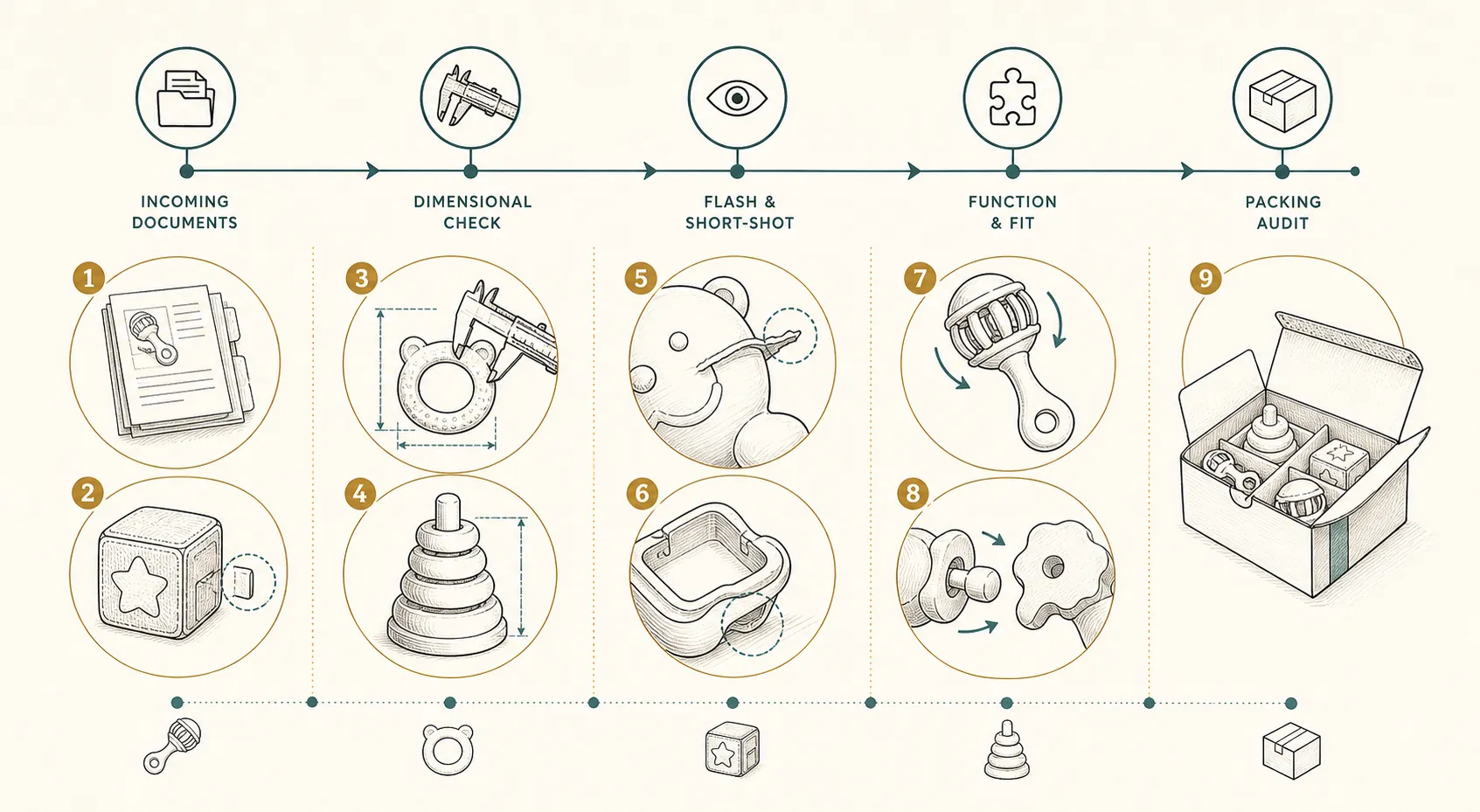
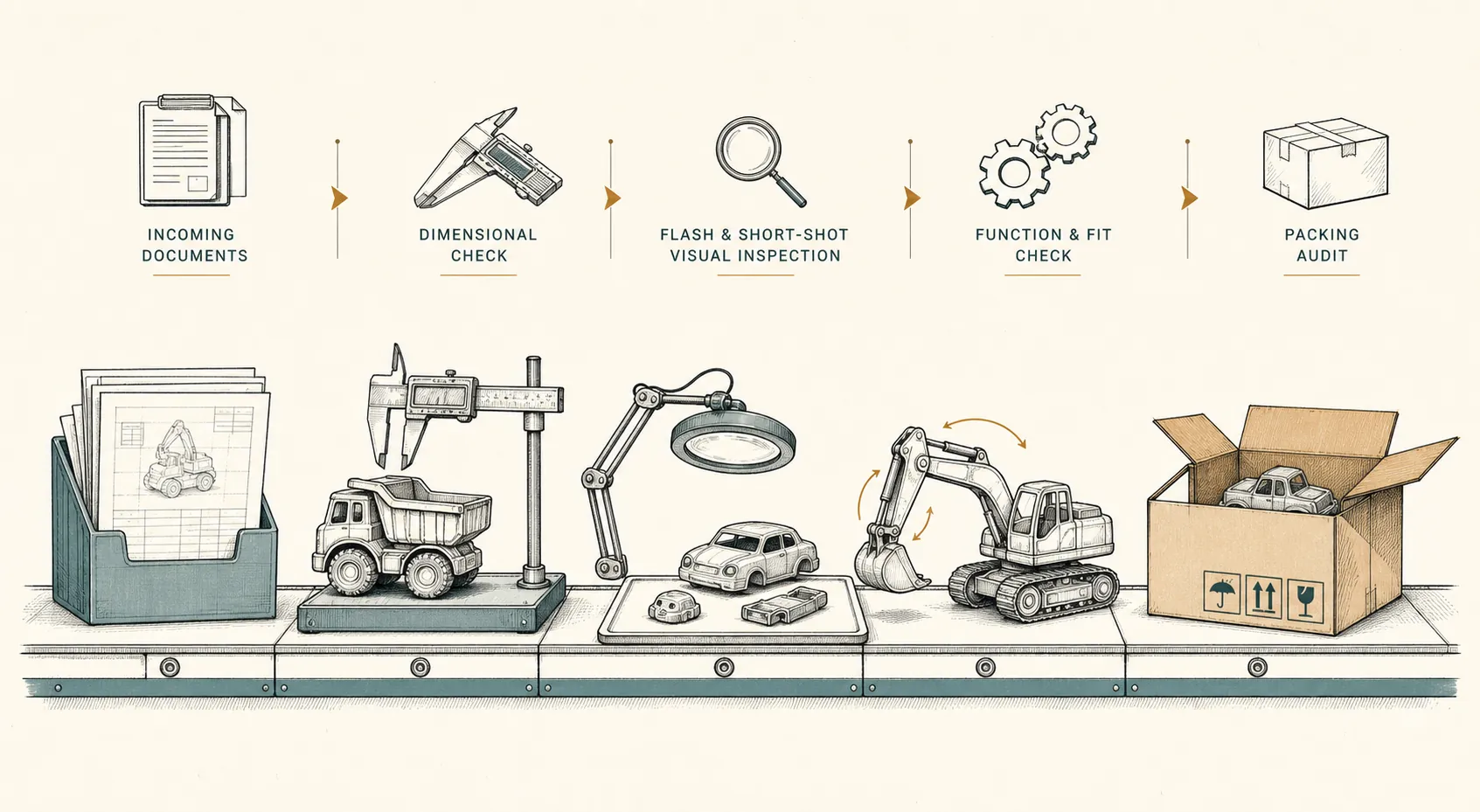
Verification is the core of risk management. Start with a factory audit—either in-person or via a third-party service—to check production lines, quality control, and storage. Then request the golden sample: a sealed physical piece that represents the production standard. Compare bulk production to that sample for color, fit, flash, and function. For compliance, ask for test reports from a CPSC-accepted lab (for US) or an EU-accredited lab (for EU). A current Children's Product Certificate lists the specific rules and the responsible party; it's product-specific, not a blanket factory certificate. Finally, verify the factory's export experience: ask for shipping records, and check if they handle packaging and palletization to avoid damage.
What Is the Typical Launch Timeline for Newborn Rattles?
From design approval to delivery, a typical OEM timeline is 12-16 weeks. Week 1-2: Finalize specs and sign contract. Week 3-6: Mold making (if new tooling) and initial samples. Week 7-8: Sample approval and revisions. Week 9-12: Third-party testing and certification (allow 4-6 weeks; popular labs can be backlogged). Week 13-16: Production and inspection. For ODM, subtract 3-6 weeks for mold making. Always add a 2-week buffer for unexpected delays in testing or rework.
FAQ
What is the minimum order quantity for custom newborn rattles?
MOQs vary by factory and design. For OEM plastic rattles, expect 1000-5000 pieces. For ODM existing designs, some factories accept 500 pieces. Always ask for the specific product and negotiate based on your volume.
What certifications do I need for newborn rattles in the US?
You need a Children's Product Certificate (CPC) based on third-party testing at a CPSC-accepted lab, covering 16 CFR part 1510 (rattles) and applicable ASTM F963 sections. From July 8, 2026, importers must eFile certificates with CBP.
How long does it take to get newborn rattles tested and certified?
Testing can take 2-4 weeks depending on the lab and backlog. For US, you need a CPSC-accepted lab; for EU, an EU-accredited lab. Factor in extra time for re-testing if the product fails.
What is the difference between OEM and ODM for newborn rattles?
OEM means the factory builds to your design; ODM means you use the factory's existing design. OEM gives more control but costs more and takes longer. ODM is faster but you must verify the design meets your market's standards.
How do I verify a supplier's compliance claims?
Request product-specific test reports from a CPSC-accepted or EU-accredited lab. A CPC is product-specific, not a blanket factory certificate. Ask for the golden sample and compare bulk production to it.
Sources
Request a Quote
Ready to source newborn rattles with confidence? Send us your RFQ with your target market, quantity, and design requirements. We'll help you evaluate OEM vs ODM options and plan your launch timeline.