Sensory baby toys wholesale only fits your program if you buy by sensory function and age band first, then verify the supplier's documents second — not by browsing a catalog for cute textures. Decide first whether your order is a classroom set (group use, wipeable, high-durability), a retail-facing assortment (packaging and shelf appeal), or a pilot sample run before either. If your buying decision is early-stage play and specialty retail, treat the supplier's sensory-function range, age-band labeling and paperwork as the pass/fail items, and treat price as the last variable. What follows is how to shortlist suppliers on classroom fit, where these products are typically made in China, how to verify a factory, and how to turn the decision into a concrete next action: an RFQ plus a pre-shipment sample.
Shortlist criteria: what to ask, what to collect, what fails
| Sensory-function range | Ask: can you supply tactile, visual, auditory, oral/olfactory, vestibular and proprioceptive items as separate SKUs? | Collect: a catalog or line sheet organized by sensory function, not a mixed photo dump. | Fail if: the range is organized only by price or novelty. |
|---|---|
| Age-band labeling | Ask: which items are labeled for infants, 1–3 years, preschool, 5+? | Collect: age marking on the product, the retail packaging and the carton. | Fail if: age is stated verbally but absent on packaging artwork. |
| Materials and mouthing | Ask: which parts are silicone, wood, TPR, felt, foam or plastic, and which are intended for mouthing? | Collect: material declaration per SKU plus the sample to feel and flex. | Fail if: material is described as 'non-toxic' with no declaration. |
| Certificates and test reports | Ask: which standards apply for the destination market — CPSIA/CPC for the US, EN71 for the EU — and can you send the reports for this exact SKU? | Collect: certificate or test report naming the product, the standard and the issuing lab. | Fail if: the document names a different product, a different factory, or has no date. |
| Batch-level documentation | Ask: does each production batch ship with documentation? | Collect: a sample batch record and the inspection format used before loading. | Fail if: documentation is promised only 'if you need it'. |
| Magnet and small-part control | Ask: does any SKU contain magnets, and what is the retention or containment design? | Collect: a written statement of whether magnets are present, plus the applicable test report. | Fail if: the answer is 'probably not' or 'small ones only'. |
| Cleanability and durability | Ask: which surfaces are wipeable, which textiles are washable, and which finishes resist repeated sanitizing? | Collect: care instructions plus a sample you can wipe and flex. | Fail if: care instructions exist only for consumer use, not for group use. |
| MOQ and packaging | Ask: MOQ per SKU and per color, and which pack formats are available (poly bag, color box, gift box, carton, classroom tray-ready)? | Collect: a written MOQ and packaging list for the exact SKU. | Fail if: MOQ is quoted per container only, with no per-SKU number. |
| Sample and lead time | Ask: sample lead time, custom production lead time, and the cut-off for your school-year or retail reset date. | Collect: a dated schedule in writing. | Fail if: lead time is verbal and unversioned. |
| Customization scope | Ask: which of size, material, color, logo and packaging can be changed, and what tooling or plate cost applies? | Collect: a written customization list and any tooling charge. | Fail if: customization is offered without stating what stays fixed. |
How should a buyer compare baby toys suppliers on materials, packaging, MOQ, lead time and available documents?
Compare suppliers on five lines only, and put each answer in writing before you negotiate price. Materials: get a per-SKU declaration that names the polymer, the wood species or finish, and the textile, plus which parts are intended for mouthing. Packaging: get the retail unit format and the carton quantity, because a color box versus a poly bag changes both your unit cost and your shelf presentation. MOQ: get it per SKU and per color, not per container. Lead time: get sample lead time and production lead time as two separate numbers. Documents: get the report that names the SKU and the standard.
Two classification cautions belong on this list. A beach or pool accessory is not automatically an aquatic toy; classification depends on intended play, water use and the applicable market definition, so do not let a supplier's category label decide your compliance route for you. And the EU toy-safety framework covers products designed or intended for use in play by children under 14 years of age, subject to listed exclusions — so 'educational' or 'classroom' language does not remove a product from toy scope.
Where a buyer has a reference point, the reference point should be the sample and the document, not the price. A recorded catalog reference is only a starting quote: for example, a wooden early-learning Montessori set for 1–3 year olds has been recorded at a MOQ of 60 and a unit price of 5.45 USD, and a multi-functional musical activity toy has been recorded at a MOQ of 36 — but those are recorded references, not a current quote, and the approved sample, packing and destination documents still have to be reconfirmed before ordering.
What questions should a retailer ask before requesting a wholesale quote for baby toys?
Ask these before the supplier sends a price, because each one changes the quote. What is the age marking on the product, the retail packaging and the carton? Which standard applies in my destination market, and can you send the report for this SKU? Does any SKU contain magnets or other small parts, and what is the containment design? Which surfaces are wipeable and which textiles are washable for group use? What is the MOQ per SKU and per color? What is the carton quantity and master carton dimension? What is the sample lead time versus the production lead time? What changes if I add my logo or change the packaging?
The magnet question is not optional for a sensory assortment. US recalls published in 2026 concerned magnetic fidget sliders and a magnetism ball game because loose high-powered magnets pose an ingestion hazard: swallowed magnets can attract each other or other metal objects, lodge in the digestive system, and cause perforations, twisting and/or blockage of the intestines, blood poisoning and death. Those records concern the named recalled products only and establish no connection to any other product or supplier — but they tell you exactly which question to ask about a magnetic sensory item before it enters a classroom or a retail assortment.
Then ask the logistics question the quote usually hides: what pack format is this price for? A price quoted per piece in bulk and a price quoted per retail-ready color box are not comparable, and the difference sits in your landed cost, not in the supplier's list.
What makes a baby toys assortment clear and useful for importers, retailers and distributors?
A useful assortment is organized by sensory function and age band, not by novelty. That means your line sheet should let a buyer answer three questions in under a minute: which sensory input does this item target, which age band is it labeled for, and is it built for one child at home or for repeated group use?
The functional taxonomy that specialty buyers already use runs across tactile, visual, auditory, oral/olfactory, vestibular and proprioceptive items. Tactile covers textured balls, mats and boards. Visual covers light, color and movement items such as liquid timers and spinning toys. Auditory covers sound cylinders, shakers and drums. Oral and olfactory covers teethers, oral chews and scent-discovery jars. Vestibular and balance covers rockers, balance beams and wobble boards. Proprioceptive covers weighted and resistance items. Mapping your SKUs to those six buckets makes the assortment legible to a classroom buyer and to a retail buyer at the same time.
Age band is the second axis. Infants need soft, gentle, mouth-safe items. Toddlers 1–3 need active discovery and fine-motor pieces. Preschoolers lean toward proprioceptive and vestibular input. School-age 5+ leans toward focus and regulation items. If a supplier cannot label each SKU with an age band, you will end up doing that work yourself — and you will own the labeling risk.
Can you outline an RFQ brief for baby toys with market, age band, quantity, pack format and delivery terms?
Yes, and a short brief gets a faster, comparable quote than a long one. Send five blocks: market and compliance route; age band; SKU list with sensory function; quantity and pack format; delivery terms.
Market and compliance route. State the destination country and the standard you expect the supplier to document for the exact SKU. Ask for the report to name the product and the standard, and state that a company-level certificate library is not accepted as a substitute.
Age band. State the band per SKU — infant, 1–3 years, preschool, or 5+ — and require the same age marking on the product, the retail packaging and the carton.
SKU list with function. One line per SKU: sensory function, material, whether it is intended for mouthing, and whether any magnet or small part is present. This is the line that lets you screen the assortment for the highest-risk items before sampling.
Quantity and pack format. Give a target quantity per SKU and per color, and name the pack format you want to price: bulk, poly bag, color box, gift box, or classroom tray-ready. Ask for the carton quantity alongside, because that number drives freight.
Delivery terms. Ask for sample lead time, production lead time and the Incoterm you are quoting against, and ask for the cut-off date that protects your school-year or retail reset window. Keep it in writing and versioned, because a verbal lead time is not a schedule.
Where this category is typically made
China's toy supply base is regional, and the region tells you which questions to ask. Injection-molded plastic toys concentrate in Chenghai, Shantou, in eastern Guangdong, where the cluster's strength is tooling, molding and high-volume plastic production. That is the right place to look for plastic sensory items, pop tubes, light-up wands and liquid timers, and it is where you should ask about scientific molding — documented process development and monitoring that makes fill speed, hold pressure and hold time repeatable — because repeatability is what keeps a reorder identical to the first shipment.
Wooden educational toys concentrate in Yunhe, Zhejiang, where the woodworking and finishing base suits stacking, sorting and Montessori-style items. Plush and textile sensory items concentrate in Yangzhou, Jiangsu, which is where you look for felt busy boards, textile mats and stitched sensory pieces. Yiwu, Zhejiang is the general-merchandise hub: it is where small mixed assortments and fast-moving novelty items are easiest to source, and it is also the easiest place to buy an unlabeled or under-documented item by accident.
No region is inherently better than another. The map tells you where a specific product type is made, which determines whether you are talking to a factory that molds its own parts, one that finishes wood, one that sews, or a trader assembling a mixed carton. For a classroom program, the first three are usually the relevant conversation; for a fast test assortment, the fourth can be a legitimate starting point as long as you still apply the same document test.
How to verify a Chinese supplier before you place a sensory baby toy order
Verification runs in four steps and the order matters: documents, sample, audit, then order. Documents first, because they are cheap and fast. Get the certificate or test report for the exact SKU, check that the product name, model and standard match your quote, and check the issue date. A report for a different model number is not evidence for your SKU.
Sample second. Ask for a production-representative sample with the retail packaging, and test the things a classroom will test: wipe the surfaces, flex the joints, check the edges, and check whether the age marking is printed where it belongs. Then ask one question that separates factories from assemblers: which part of this item do you make in-house, and which parts come from another supplier?
Audit third. If your order size justifies it, commission a third-party factory audit rather than relying on a supplier's own photos. A useful audit confirms the legal entity, the production site, the in-house versus outsourced processes, and the quality control steps actually performed. If your order does not justify a paid audit, the lighter version is a video walkthrough of the specific production line plus the batch record format.
Order last. Put the approved sample, the packaging artwork, the age marking, the document list and the delivery schedule into the purchase order as referenced attachments, and state that the production batch must match the approved sample. That single clause is what makes the earlier three steps worth doing.
What does a classroom-fit order actually look like in practice?
A buyer setting up an early-learning sensory corner usually starts with a function map, not a product list. They define how many children use the space at once, which sensory inputs the room already covers, and which are missing. That map turns into a short list of SKUs per function, each with an age band and a pack format.
The next step is a pilot. Order one or two SKUs as samples, put them in the room, and watch what happens to the surfaces, the stitching and the small parts after a few weeks of group handling. Items that survive that test become the reorder base; items that do not get replaced before they scale into a full assortment.
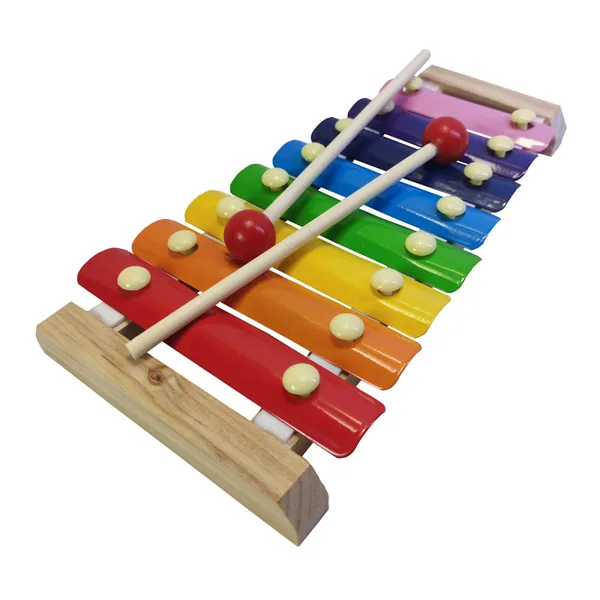
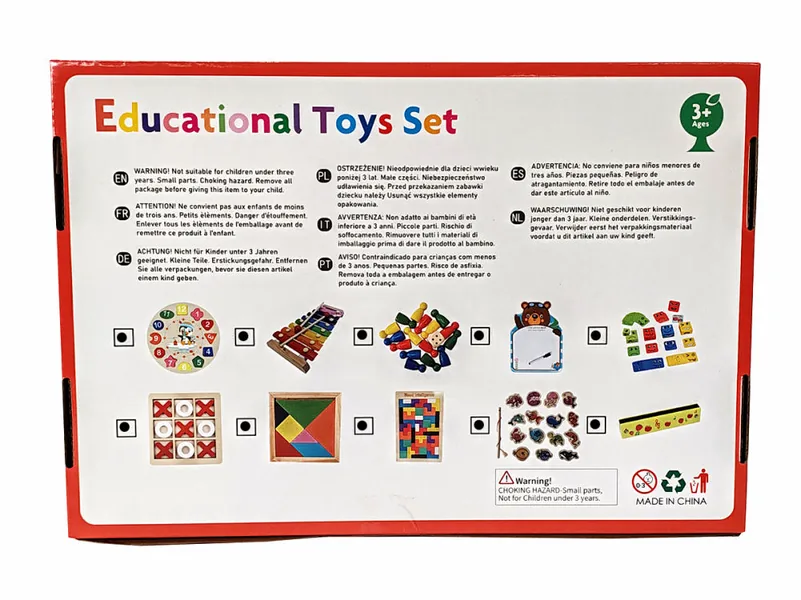
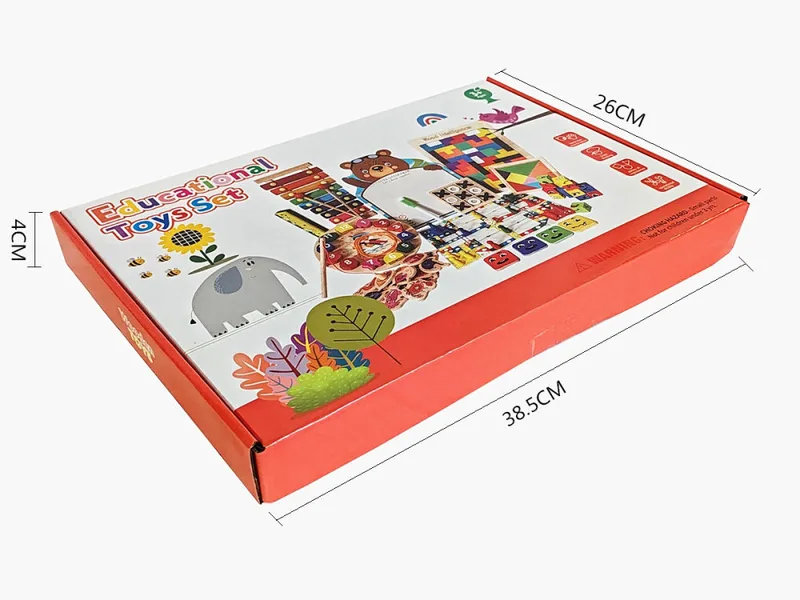
For a wooden early-learning set aimed at 1–3 year olds, a recorded catalog reference shows a MOQ of 60 and a unit price in the 5.45–6.15 USD band, with color-box packaging and 30 units per carton. That kind of record is useful as a planning benchmark — it tells you what MOQ band and carton density to expect for this product class — but it is a recorded reference only. The approved sample, the current quote, the packing and the destination documents still have to be reconfirmed before you commit, and no certification, age suitability, licensing, stock or factory capacity should be assumed from it.
FAQ
What MOQ should I expect for custom sensory baby toys?
Expect MOQ to be quoted per SKU and per color, and to rise when you add tooling, custom color or custom packaging. Recorded references in this product class include a MOQ of 36 for a multi-functional musical activity toy, 40 for a felt busy board, 60 for a wooden early-learning set and 120 for a color-sorting matching game, but these are recorded references only — reconfirm the current MOQ for your exact SKU and pack format before quoting your own customer.
Which certification applies to sensory baby toys sold in the US or the EU?
It depends on the destination market and the product. For the US, ask for the children's product certificate and the test report for the exact SKU; for the EU, EN71 is the standard buyers commonly reference. Do not accept a company-level certificate library as a substitute for a report naming your product, and confirm the current requirement with your compliance advisor because scope rules can change.
Are magnetic sensory toys a problem for classroom use?
Magnets require specific scrutiny. US recalls published in 2026 concerned named magnetic fidget sliders and a magnetism ball game because loose high-powered magnets pose an ingestion hazard — swallowed magnets can attract each other or other metal objects, lodge in the digestive system, and cause perforations, twisting and/or blockage of the intestines, blood poisoning and death. Those records concern the named recalled products only and establish no connection to any other product or supplier, but they justify asking any supplier to state in writing whether magnets are present and how they are contained.
How long does a custom sensory toy order take?
Treat sample lead time and production lead time as two separate numbers and get both in writing. Supplier pages in this category describe sample turnaround in the range of several days to a week and custom production in the range of roughly five to six weeks, but these are published supplier statements, not verified schedules — your own cut-off should be confirmed against the factory's current capacity and your shipping window.
Should I audit the factory or just order a sample?
Order a production-representative sample first, because it is fast and it tests the actual product. Commission a third-party audit when the order value or the classroom-safety exposure justifies the cost, and in that audit confirm the legal entity, the production site, which processes are in-house, and the quality control steps actually performed. If a paid audit is not justified, ask for a video walkthrough of the specific line plus the batch record format.
How do I compare two suppliers quoting different pack formats?
Convert both quotes to a landed-cost comparison before deciding. Ask each supplier for the retail unit dimensions, the carton quantity and the master carton dimensions, then compare the total cost of getting the same number of retail units to your warehouse. A lower piece price in bulk packaging can lose to a higher piece price in a shelf-ready color box once freight and repacking are counted.
Sources
- Education Toy Wholesale
- Sensory Toys Materials
- Sensory Toys Xihakidz
- Sensory Toys for Every Need
Turn the shortlist into an RFQ
If you already have a destination market, an age band and a target SKU list, the fastest next step is an RFQ plus a production-representative sample: send the five-block brief above, ask for the SKU-level document and the carton data, and request a sample with the retail packaging attached. If you want to see how we structure a classroom-fit range, you can request a quote or arrange a factory audit through www.rantoys.com — and apply the same document test to us that you would apply to any other factory on your shortlist.