A US importer sends an RFQ for 6 sensory SKUs, asks for 'good ecommerce images,' and gets back a spreadsheet of specs with three phone photos of a sample on a warehouse floor. That is the moment the sourcing decision is actually made. For sensory baby toys wholesale, ecommerce image readiness is not a marketing afterthought — it is a packaging and merchandising test that tells you whether the supplier understands retail, or only understands production. Use the image and packaging evidence as a screening filter: if a factory cannot show you a sealed golden sample, a retail-ready pack format, and pieces-per-carton data tied to the SKU, the MOQ number is not the real problem.
This page covers how to evaluate any sensory baby toy supplier using comparable product evidence, what the Chenghai/Shantou ecosystem gives you, how to verify US and EU documents, and how to write an RFQ that forces image and packaging deliverables into the quote. Attach an image and packaging checklist to your RFQ so every supplier answers the same questions.
What Buyers Should Decide Before Comparing Sensory Baby Toy Suppliers
- Sensory baby toys sourced from China span plush, plastic, wood and mixed-material constructions, and MOQ posture is set by material and tooling, not by category. In supplied product records, MOQs range from 42 pieces (a 5-piece wooden rattle set) to 500 pieces (a mixed-material fidget countdown calendar); a plush play set carries no published MOQ, which means ask — a blank field is not a low MOQ.
- Ecommerce-image readiness is a verifiable capability, not a claim. Ask for the retail pack format, the pieces-per-carton figure, and whether images can be shot against the actual retail pack. A supplier that supplies retail-ready packaging and carton data can support listing images; one that only quotes FOB unit price usually cannot.
- US-market sensory toys intended primarily for children 12 or younger generally require third-party testing at a CPSC-accepted laboratory and a Children's Product Certificate; a CPC is product-specific and cites each applicable rule, so it cannot be treated as a blanket factory certificate.
- EU-market toys must meet the applicable essential safety requirements of Toy Safety Directive 2009/48/EC, and CE marking plus an EU Declaration of Conformity must be matched to the product scope. UKCA and a VOC file are different papers — a certificate that does not match the lot is not paperwork.
- Chenghai and Shantou give buyers dense access to plastic, plush and mixed-material toy production and export services; Yiwu is stronger for small-order assortment and general merchandise. Choose Chenghai/Shantou for tooling-driven sensory toys and repeat programs, Yiwu for low-commitment assortment tests.
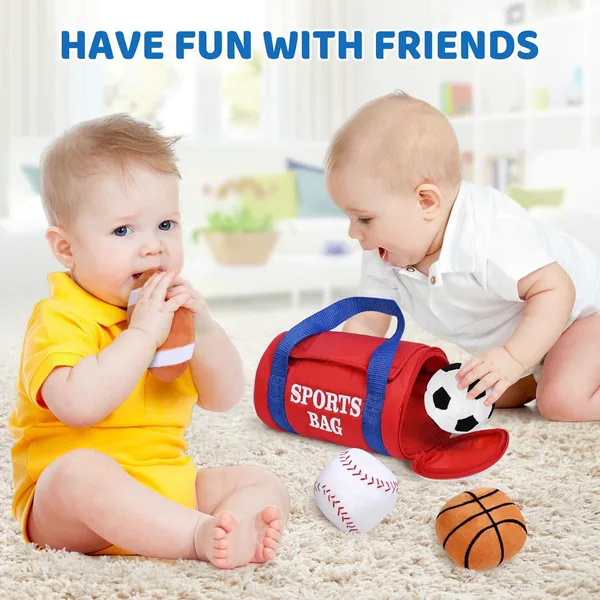
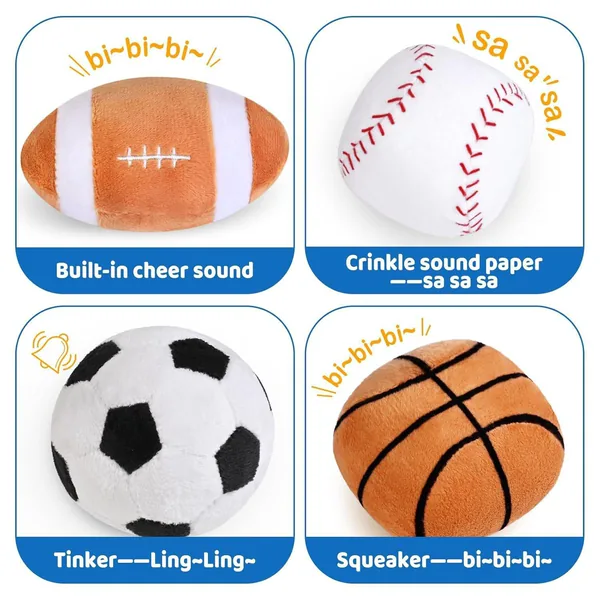
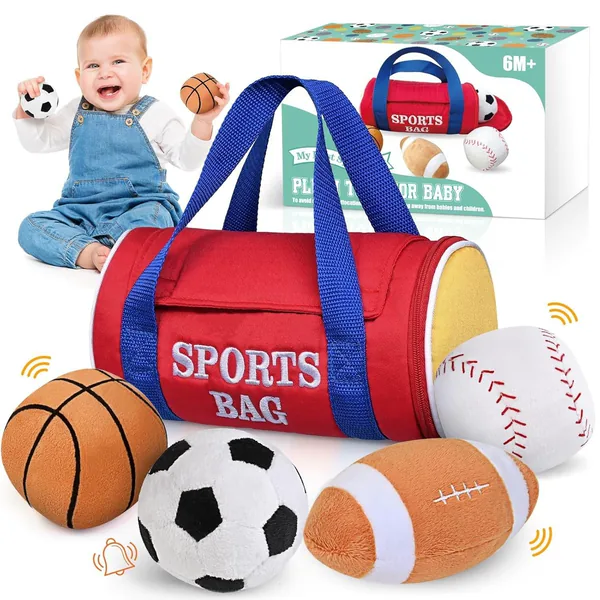
How should a buyer compare baby toys suppliers on materials, packaging, MOQ, lead time and available documents?
Compare suppliers on a fixed matrix, not on narrative — materials, packaging, MOQ, lead time and documents, in that order. Materials first: plush, plastic, wood and mixed-material sensory toys behave differently in testing, carton weight and image styling. A plush play set and a wooden busy board will not share the same MOQ logic, carton dimensions, or photography setup.
Packaging second: ask for the retail pack format (blister, color box, polybag with header, or eco-minimal), the master carton quantity, and whether barcodes are applied to the retail unit or the carton. EAN/UPC symbols are barcode formats used for retail identification, but data assignment must match the retailer or GS1 owner record — so confirm who owns the barcode before images are shot with a visible barcode.
MOQ third: treat the published MOQ as a starting position tied to material and tooling. In supplied product records, MOQs for sensory-adjacent items range from 42 to 500 pieces depending on construction. A null MOQ field means ask, not assume. Lead time should be requested per SKU, per pack format, and per private-label status; Incoterms such as FOB or CIF allocate cost and risk but do not certify the toy or replace CE, CPC or UKCA evidence, and every Incoterm must name a place or port.
Documents last, and always matched to the lot. Ask for the test report edition, the product configuration and age grade it covers, the responsible party, and the date of manufacture. A supplier should notify the buyer before changing resin, colorant, mold, process, component, sub-supplier or packaging that can affect the released toy — that change-notice discipline is what keeps image claims and listing claims true across repeat orders.
Sensory Baby Toy Supplier Comparison Matrix (Fill With Factory Answers)
| Manufacturer | Name the legal entity and the factory address, not just the brand; ask whether production is in-house or subcontracted |
|---|---|
| Specialty (plush / plastic / educational) | Plush: soft play sets and plush sensory bags. Plastic: bath toys, busy boards, magnetic drawing boards. Educational/wood: Montessori rattles, LED busy boards. Mixed: fidget and countdown formats |
| MOQ | varies by spec — supplied records show 42–500 pcs depending on construction; null field = ask factory |
| Origin (Chenghai / Shantou / Yiwu) | Chenghai (Shantou, Guangdong) for tooling-driven plastic, plush and mixed-material toys; Yiwu for small-order assortment and general merchandise |
| OEM/ODM | Ask factory — confirm whether color, artwork, packaging and barcode changes are done on existing tooling (OEM) or require new tooling (ODM) |
| Certifications | Ask for product-specific evidence: US — third-party test report from a CPSC-accepted lab plus a Children's Product Certificate; EU — CE marking and EU Declaration of Conformity under Toy Safety Directive 2009/48/EC, with EN 71 reports; never accept a blanket factory certificate |
| Ecommerce image readiness | Ask for retail pack format, pieces-per-carton data, and whether images can be shot against the actual retail pack and sealed golden sample |
| Sample and lot control | Ask whether a sealed golden sample is kept and whether bulk is compared to it for color, fit, flash and function |
What makes a baby toys assortment clear and useful for importers, retailers and distributors?
A clear sensory baby toy assortment is organized by age band, material and price tier, not by a long SKU dump. Buyers who import mixed containers often need high-turnover filler to complete CBM alongside larger goods — but generic unbranded filler complicates retail storytelling. A better structure is a small block of themed SKUs with consistent packaging, so the shelf or listing page reads as one program.
For ecommerce images, the assortment structure determines the shot list. If the retail pack is a clear blister, the image can show the product in-pack and out-of-pack. If the pack is a color box, you need front, back, in-use and scale shots. If the product is plush or mixed-material, buyers want a texture or squeeze image — one case account describes a display used as a 'test zone' where customers squeeze before buying, which is exactly the behavior an ecommerce image has to simulate.
Practical structure for a first sensory program: 4–8 SKUs across two materials (for example plastic bath/sensory and wood or plush), one pack format, one barcode owner, and one image standard. Then expand after sell-through data, not before.
How do you verify a Chinese sensory toy supplier before the second order?
Verification starts with the physical sample, not the PDF. In Chenghai, the argument that ends a color dispute is the sealed golden sample on the QC shelf — emails do not. Compare bulk to that physical piece on color, fit, flash and function. Buyers who approve only a photo pay for it on the second lot. So the first verification step is: request the sealed golden sample, sign it, and require that it be kept as the reference for every subsequent lot.
Second, verify documents against the lot. For the US market, children's products subject to a CPSC-enforced rule generally require third-party testing and a Children's Product Certificate; the CPC must identify the product, cite each applicable rule, name the manufacturer or importer, give test-record contact, date and place of manufacture, testing dates and locations, and the CPSC-accepted laboratory. For the EU market, check the CE marking and EU Declaration of Conformity against the product scope and the current Toy Safety Directive 2009/48/EC text. The General Product Safety Regulation (EU) 2023/988 is a separate instrument and should not be confused with toy-specific conformity.
Third, verify the packaging and labeling fields. Tracking information should be permanent and support product identification where applicable. Age grading and small-part risk are connected, and assemblies, detachable accessories and packaging components need the same review discipline. Review packaging wording and product markings as controlled fields that can change with the SKU.
Fourth, verify the change-notice process in writing. A supplier should notify you before changing resin, colorant, mold, process, component, sub-supplier or packaging that can affect the released toy. If that clause is missing from the PO terms, your ecommerce images and listing claims can go stale without anyone telling you.
Can you outline an RFQ brief for baby toys with market, age band, quantity, pack format and delivery terms?
Yes — and a structured RFQ is the cheapest quality tool you have. It forces every supplier to answer the same questions, which makes comparison possible and exposes suppliers who only quote unit price.
Use this brief: (1) Market and compliance — destination country, applicable framework (US: CPSC rules, third-party testing and CPC; EU: Toy Safety Directive 2009/48/EC, CE marking and EU DoC), and required document list per SKU. (2) Product — SKU name, material, sensory function, age band, and whether it is plush, plastic, wood or mixed. (3) Quantity — target units per SKU, total order, and whether it is a mixed-container or full-container program; state if you need CBM filler. (4) Pack format — retail pack type, master carton quantity, barcode owner (retailer or GS1 record), and pieces-per-carton data for the packing list. (5) Delivery terms — Incoterm with a named place or port, target ship window, and whether you want pre-shipment QC photos. (6) Ecommerce image deliverables — whether the supplier provides product images against the actual retail pack, or whether you shoot them; if the supplier provides them, specify angles, in-pack and out-of-pack, scale reference, and rights to use.
One caution on image deliverables: no supplied record confirms that any specific factory provides a standard ecommerce image package. Treat image assets as a negotiated deliverable per quote, and confirm file format, resolution, background, and usage rights in writing before production. If the supplier cannot provide them, budget for your own photoshoot against the sealed golden sample and retail pack.
Why Chenghai and Shantou Lead for Sensory Baby Toy Sourcing — and When Yiwu Wins
Chenghai's advantage is density. Mold making, injection molding, assembly, printing, packaging and export services sit close together inside Shantou, Guangdong, which shortens the loop between a tooling change and a shipped carton. For sensory baby toys — which often mix plastic, plush, wood and electronic components in one program — that proximity reduces the coordination cost of multi-material SKUs, and makes repeat-lot color and fit control more practical because the golden sample and the production line are in the same place.
Yiwu's advantage is breadth and low-commitment assortment. If your goal is to test 20 small sensory items across categories before committing to tooling, Yiwu's market structure supports that. If your goal is a repeat retail program with private-label packaging, barcode control and change-notice discipline, Chenghai/Shantou is the stronger base.
Use both when the program justifies it: Chenghai/Shantou for the core tooling-driven SKUs, Yiwu for filler and one-off assortment tests. Just keep the image and packaging standard consistent across both, or the listing page will look like two different suppliers — which it is.
FAQ: Sourcing Sensory Baby Toys for US and EU Retail
What MOQ should I expect for custom sensory baby toys from China?
Expect MOQ to follow material and tooling rather than category. In supplied product records, sensory-adjacent items run from 42 pieces for a multi-piece wooden rattle set to 500 pieces for a mixed-material countdown calendar, with plastic bath toys often in the 60–90 piece range. A null MOQ field means ask the factory — it is not evidence of a low MOQ.
Do sensory baby toys need a Children's Product Certificate for the US market?
Generally yes if the product is designed or intended primarily for children 12 or younger and is subject to a CPSC-enforced safety rule. The CPC must be based on third-party testing at a CPSC-accepted laboratory and cite each applicable rule; it is product-specific, not a blanket factory certificate.
What EU documents should I ask for before listing sensory toys?
Ask for CE marking and an EU Declaration of Conformity matched to the product scope under Toy Safety Directive 2009/48/EC, plus the relevant EN 71 test reports. Note that the General Product Safety Regulation (EU) 2023/988 is a separate instrument, and UKCA plus a VOC file are different papers — confirm which document covers which test and lot.
Can a supplier provide ecommerce images with the wholesale order?
Treat ecommerce images as a negotiated deliverable, not a default. Ask specifically whether images can be shot against the actual retail pack and sealed golden sample, and confirm file format, angles, scale reference and usage rights in writing. If not, budget for your own photoshoot after the golden sample is approved.
How do I verify a Chenghai toy factory before placing a repeat order?
Start with the sealed golden sample: approve it physically and require bulk comparison on color, fit, flash and function. Then match documents to the lot — CPC and third-party test report for the US, CE/DoC and EN 71 reports for the EU — and confirm a written change-notice clause covering resin, colorant, mold, process, component, sub-supplier and packaging.
Is FOB or DDP better for a first sensory baby toy order?
Neither is inherently better; they allocate different responsibilities. FOB or CIF with a named port is common for buyers who control their own freight and customs broker, while DDP can simplify landed cost for a first test order. The Incoterm does not certify the toy or replace CE, CPC or UKCA evidence, and it must always name a place or port.
Sources
Request a Quote or Factory Audit for Sensory Baby Toys
Send your RFQ with the six fields above — market, product, quantity, pack format, delivery terms and image deliverables — and ask for the sealed golden sample, pieces-per-carton data, and the document list per SKU. If you are comparing multiple suppliers, request the same evidence set from each so the comparison is real.
For buyers who want to see the process before committing, a factory audit or sample review in Chenghai/Shantou is the fastest way to test whether a supplier can hold color, fit and packaging across lots. Request a quote or arrange an audit with your target specification, and we will map each SKU to the market document and packaging format it needs.