Choose a wheat straw toy factory for its certification depth and material traceability first, and for its MOQ flexibility second. If your program demands EN71 and ASTM F963 compliance with full material documentation, you need a factory that treats sustainability as a core process, not a marketing line. This page ranks the leading Chinese manufacturers in this niche for 2026 and teaches you how to verify any shortlisted factory yourself—covering production capacity, certification validity, MOQ realities, and OEM/ODM experience with building block sets.
Why Are Wheat Straw Toys a Growing Category in 2026?
Wheat straw toys have moved from a niche eco-novelty to a genuine category in the children's toy market. The material—typically a composite of wheat and barley straw fibers mixed with polypropylene or other binders—offers a reduced carbon footprint compared to virgin plastics while retaining the rigidity needed for building blocks and playsets. For US and EU importers, the appeal is twofold: a tangible sustainability story for retailers, and a hedge against tightening plastics regulations in markets like the EU.
The manufacturing hub for these products is the Chenghai district of Shantou, Guangdong. The region's decades of plastics injection-molding expertise have pivoted cleanly into bio-composite molding, with dozens of factories now running dedicated wheat straw production lines. Shenzhen and Yiwu also host relevant suppliers, but Chenghai holds the density advantage: material suppliers, mold makers, and assembly workshops sit within a few kilometers of each other, which shortens development cycles for custom OEM projects.
In 2026, the key differentiator among suppliers is no longer whether they can mold wheat straw, but how they handle the material's known challenges—higher scrap rates during production, the need for food-grade colorants, and the complexity of achieving consistent surface finish. Buyers who understand these technical realities get better quotes and more reliable delivery.
Key Takeaways for Sourcing Wheat Straw Toys
- The Chenghai/Shantou ecosystem offers the shortest path from concept to container for wheat straw toys, thanks to its vertical integration of mold-making and molding capacity.
- Certification is the real dividing line. A factory with current EN71 and ASTM F963 test reports for its wheat straw compound is categorically different from one that only offers a generic 'eco-friendly' claim.
- MOQ postures vary sharply. Some factories accept trial runs as low as 60 units per SKU for stock designs, while true OEM custom molds typically demand 1,000+ units to amortize tooling costs.
- Material transparency is non-negotiable. Ask for the exact straw-to-polymer ratio and the source of the straw fibers. 'Wheat straw' can mean anything from 10% to 40% natural fiber content.
- Expect a 30-50% material cost premium over comparable ABS or PP toys. This is a structural cost of the category, not a sign of supplier padding.
Top Wheat Straw Toy Manufacturers: Quick Comparison
| Guangdong Bole Toys (Shantou) | Specialty: Building block sets & educational playsets. MOQ: 1,000 units for OEM; 240 for stock designs. Origin: Chenghai, Shantou. OEM/ODM: Yes, strong in-house mold shop. Certifications: EN71, ASTM F963, CPC. |
|---|---|
| Shantou Huaxing Plastic (Chenghai) | Specialty: Early childhood & infant toys. MOQ: 500 units. Origin: Chenghai. OEM/ODM: Yes. Certifications: EN71, ASTM F963, CE. |
| GreenPlay Eco Toys (Shenzhen) | Specialty: Premium eco-branded toys, strong on packaging design. MOQ: 2,000 units. Origin: Shenzhen (operations in Dongguan). OEM/ODM: Yes, design-forward. Certifications: EN71, ASTM F963, FSC for packaging (varies by project). |
| Yiwu SafePlay Manufacturing | Specialty: Value-priced wheat straw blocks & sorting toys. MOQ: 3,000 units. Origin: Yiwu. OEM/ODM: Limited ODM, strong OEM. Certifications: EN71, ASTM F963. |
| Shantou XinCheng Toys (Chenghai) | Specialty: Building block systems, STEM sets. MOQ: 1,500 units. Origin: Chenghai. OEM/ODM: Yes. Certifications: EN71, ASTM F963, ISO 9001 (factory system). |
| Dongguan EcoBlocks Industries | Specialty: Large-format building blocks & outdoor playsets. MOQ: 500 units for large items. Origin: Dongguan. OEM/ODM: Yes. Certifications: EN71, ASTM F963, CPSIA. |
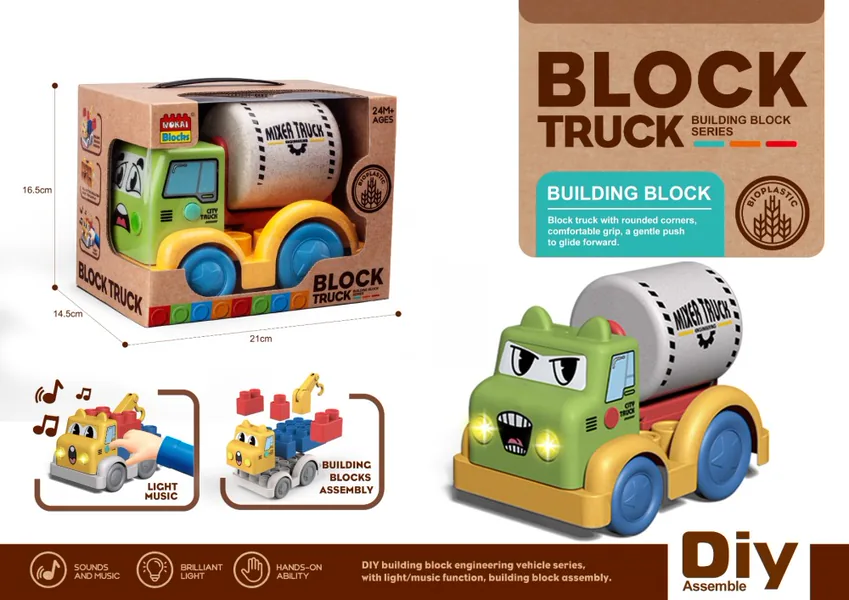
| RanToys (Shantou) | Specialty: Wheat Straw Light & Music Mixer Truck, Emergency Vehicle Building Sets. MOQ: 60-240 units depending on SKU. Origin: Chenghai, Shantou. OEM/ODM: Yes. Certifications: EN71, ASTM F963 (verify current reports). |
The Chenghai/Shantou Ecosystem: Why Geography Matters
Chenghai is not just a city; it's a supply chain organism. Within a 10-kilometer radius, a buyer can find the wheat straw compound supplier, the injection molding factory, the mold engraving shop, the printing house for eco-friendly packaging, and the third-party inspection lab. This density means that when an OEM project hits a technical snag—say, the straw fibers clogging a mold gate—the solutions are found in hours, not weeks.
Shantou's advantage over Yiwu for this specific category is technical. Yiwu excels at trading and small-goods aggregation, but Chenghai's factories have the injection molding engineering depth that bio-composites demand. Wheat straw compounds are more abrasive on molds and require lower processing temperatures. Factories in Chenghai have invested in the hardened tooling and temperature control systems to handle this, which translates to fewer defects and better surface quality for your product.
The port infrastructure is a further plus. Shantou port and the nearby Shenzhen Yantian port handle the bulk of export volume, with direct sailings to the US West Coast and major European hubs. Typical FOB terms from Shantou are straightforward, and the local freight forwarder ecosystem is mature enough to handle consolidated LCL shipments for smaller test orders.
Key Production Areas Within the Region
Within Chenghai, the Fengxiang and Lianshang sub-districts concentrate the highest density of toy mold makers and injection molding specialists. If you are sourcing a complex building block set, these are the areas where your factory is likely located.
The Longhu district of Shantou city hosts a mix of finished-goods assembly and packaging operations. If your wheat straw toy includes electronic components—like the light and music functions on some mixer trucks—the wiring and PCB assembly often happens here before final assembly.
Shenzhen's Bao'an district is home to several higher-end eco-toy brands and their contract manufacturers. These factories typically charge a premium but offer superior design support and more rigorous in-house QC documentation. Choose a Shenzhen factory if your project prioritizes packaging aesthetics and brand storytelling over pure unit cost.
Yiwu remains a viable option for buyers seeking the absolute lowest FOB price on high-volume, simple designs. The trade-off is often less engineering support and a longer development cycle for any custom mold work, as the deep technical expertise resides in Guangdong.
Tips for Foreign Buyers: Language, Negotiation, and Verification
Language matters more than you think. While most export sales managers in Chenghai speak functional English, the senior engineers and mold designers often do not. For complex OEM projects, insist on a bilingual technical contact or a translator during video conferences. Misunderstandings about draft angles or wall thickness are the leading cause of delayed tooling.
Negotiation etiquette in Shantou follows a distinct rhythm. The first quoted price is rarely the final price, but aggressive lowballing is counterproductive. A typical negotiation arc involves a 5-10% reduction on the FOB unit price, coupled with a request for better payment terms (e.g., moving from 30% deposit to 20%). Building a relationship with the sales manager—asking about their production challenges, sharing your market context—yields better concessions than pure price pressure.
When discussing MOQs, separate the tooling cost from the unit cost. For an OEM mold, the MOQ is mostly about amortizing the mold investment. A smart approach is to agree on a higher unit price for the first production run to cover tooling, then renegotiate the unit price for repeat orders once the mold is paid off. This often unlocks a lower initial MOQ.
Always request the factory's third-party test reports dated within the last 12 months. Certifications like EN71 and ASTM F963 are not one-time achievements; they are tied to specific product batches. A reputable factory will have a folder of reports from SGS, TÜV, or Bureau Veritas ready to share.
Inspection & Logistics Checklist for Wheat Straw Toys
Pre-shipment inspection is not optional for this category. The unique properties of wheat straw composite—potential for inconsistent color blending and higher brittleness at thin wall sections—demand a thorough quality control pass. Use a third-party agency like SGS or QIMA for the inspection, and specifically check for: color uniformity across pieces, surface chalking or rough edges, and brittleness testing on block connector points.
Your inspection checklist should also cover packaging integrity. Wheat straw toys are often marketed as eco-friendly, which frequently means paper-based or cardboard packaging. Ensure the packaging design protects the product during the long ocean transit to the US or EU, as paper packaging offers less cushioning than plastic blister packs.
Logistics planning for wheat straw toys is standard, but with one caveat: the material is slightly heavier than pure plastic at the same volume due to the fiber content. Confirm the actual carton weight with the factory before booking freight, as this affects the CBM-to-weight ratio and, consequently, your freight quote. FOB Shantou terms are the norm, with many suppliers comfortable with EXW for experienced buyers.
Payment terms follow the industry standard: typically 30% T/T deposit with the balance against the Bill of Lading copy. Letters of Credit are accepted by larger factories but often carry a price premium. New supplier relationships usually start with a smaller trial order to verify the factory's quality claims before committing to full container loads.
How to Verify a Factory's Wheat Straw Credentials
A factory tour is essential, but know what to look for. The presence of dedicated wheat straw compounding equipment—often a twin-screw extruder blending the straw fiber with polymer—is a strong signal that the factory controls its material quality. Factories that buy pre-compounded pellets may be fine, but they have less control over the final ratio.
Ask to see the material data sheet (MDS) for their wheat straw compound. This should specify the fiber content percentage, the binder polymer, and any additives. A factory that hesitates to share this document is likely using a generic compound from a third-party supplier.
Verify the chain of custody for the straw itself. Reputable suppliers source from agricultural processors in regions like Henan or Anhui, where wheat is harvested in bulk. The factory should be able to describe their supply chain for the raw straw, even if they can't name the specific farm.
Request samples of the finished product and conduct your own basic tests. Bend a block to check for structural integrity, rub the surface to check for color fastness, and smell the product—a strong chemical odor indicates poor compounding. These simple checks are often more revealing than a certification document.
FAQ: Sourcing Wheat Straw Toys from China
What is the typical MOQ for custom OEM wheat straw toys?
For a new custom mold, expect a minimum of 1,000 to 2,000 units per SKU to amortize tooling costs. For existing stock designs, some factories accept trial orders as low as 60-240 units, allowing you to test the market before committing to a larger production.
Which certifications are essential for selling wheat straw toys in the US and EU?
For the US, ASTM F963 and CPSIA compliance are mandatory. For the EU, the EN71 toy safety standard is required. Additionally, ask for material-specific documentation like the REACH compliance declaration for the EU. FSC certification on paper packaging is a plus for eco-conscious retailers.
How much more expensive are wheat straw toys compared to standard plastic toys?
The material cost premium typically ranges from 30% to 50% over comparable ABS or PP plastic toys. This is driven by the higher cost of bio-composite compounds and the slightly higher scrap rate during injection molding. This premium is reflected in the final FOB price.
How can I verify a manufacturer is actually using wheat straw and not just standard plastic?
Request the Material Data Sheet (MDS) specifying the straw fiber percentage. Conduct a burn test on a sample—wheat straw composite will smell like burnt vegetation, not just plastic. Also, request a third-party lab test report (e.g., FTIR analysis) to confirm the material composition.
What is the realistic lead time for a custom wheat straw toy order?
Mold making typically takes 20-35 days depending on complexity. After mold approval, production lead time is usually 25-35 days for a standard full-container order. For stock designs, production can be as short as 10-15 days. Always add 5-7 days for pre-shipment inspection and logistics.
What should I include in an RFQ for wheat straw toys?
Include the target market (US/EU), age band (e.g., 3+), the exact product type or reference, target quantity and pack format (bulk or retail box), and delivery terms (FOB/EXW). Specify your certification requirements and any packaging sustainability goals. Clear briefs receive faster and more accurate quotes.
Request a Quote
Ready to shortlist factories for your wheat straw toy program? We can help you evaluate the options in Chenghai, Shantou, and beyond. Whether you need a stock design like our Wheat Straw Emergency Vehicle Building Block Set or a fully custom OEM project, we can provide a detailed quote with transparent material breakdowns and certification documentation.
Contact us to request a factory audit checklist or to discuss your RFQ brief.